Flying With 2 Engines, and Becoming A CFI

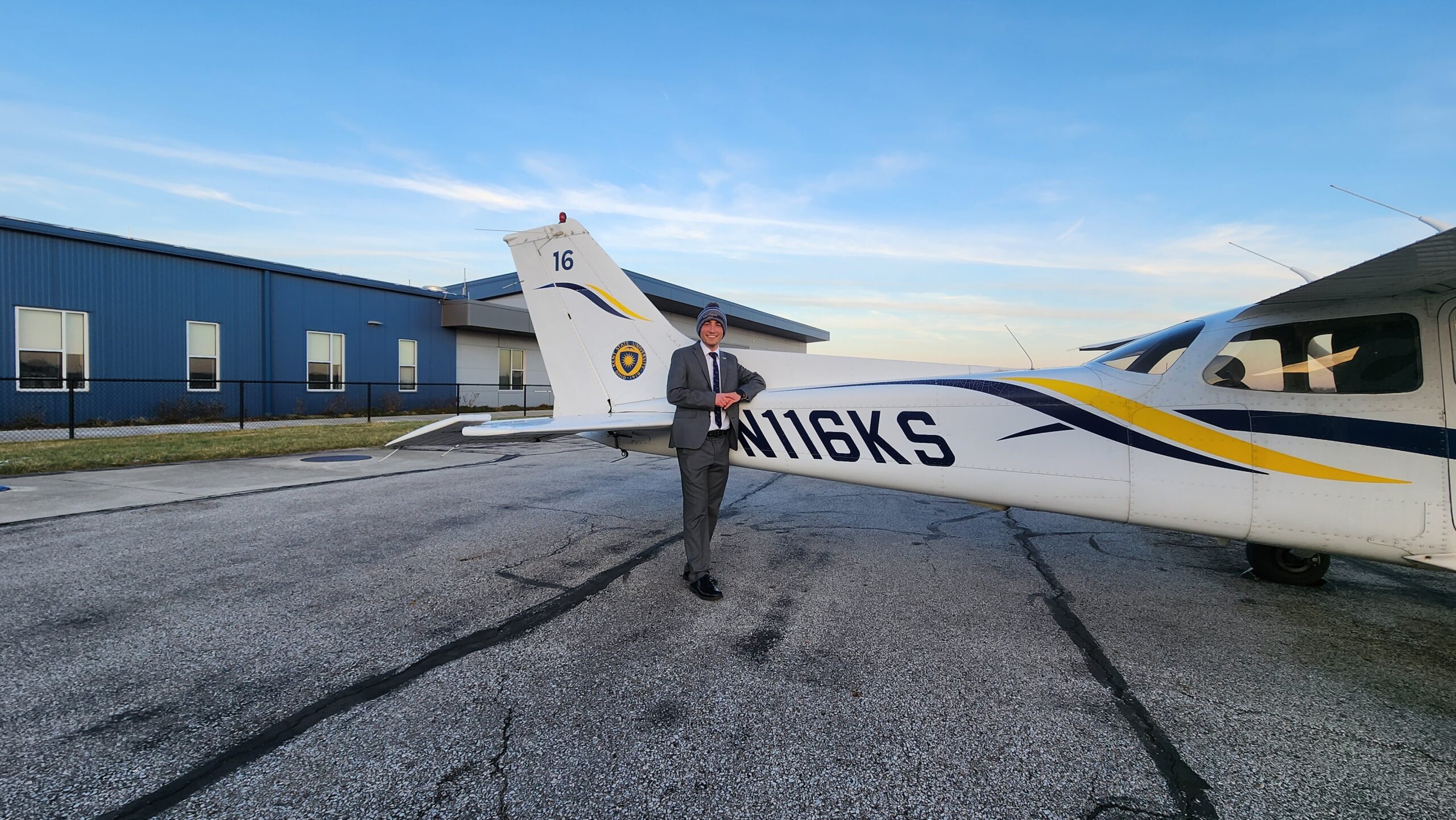
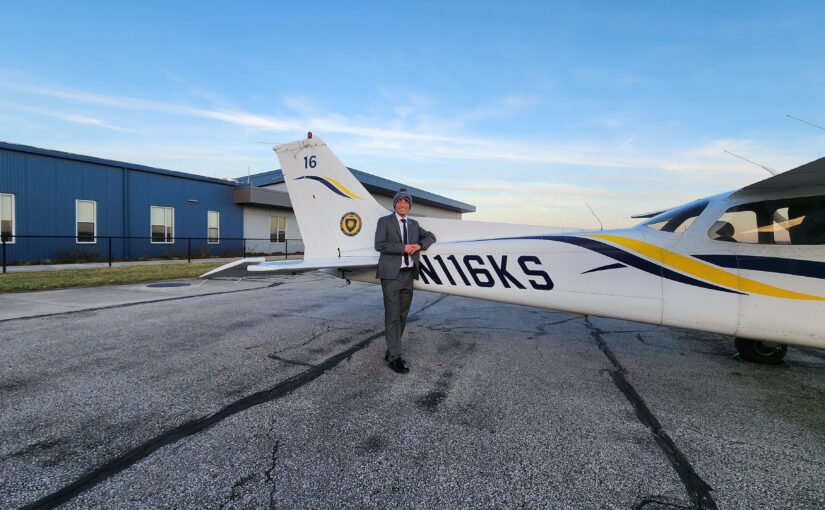
Hello again everyone! After a very busy semester of flying, work, and classes, I finally have time to update everyone about my various adventures. I passed my Commercial Multi-Engine checkride on December 4! I had hoped to finish multi earlier in the semester, but my instructor left for the airlines and it took me a few weeks to get a new MEI because a lot of our previous MEIs had also left for the airlines. After I got a new MEI, I had a couple of review flights and was in for the checkride. 

The oral was just over an hour long and was pretty straightforward. We first started going over some multi-definitions and then V speeds for the Piper Seminole. After that, we talked about multi-aerodynamics and the critical engine and why the left engine is the critical engine. We then moved onto systems, which made up most of the oral. Starting with the systems, we talked about the landing gear and it was pretty easy because it has the same landing gear as the Piper Arrow I had already been tested on. With the gear, I was given some scenarios about a hydraulic leak and where we would first see the indication. We then talked about what I would do if I only saw 2 gear-down indications which led to the microswitches on our aircraft.  After the gear, we moved to the propeller. I was asked what keeps the prop from feathering and how we can change the pitch from feathered. After the propeller, we discussed the fuel tank which was the longest part of the questioning of the system. My DPE asked me to draw out the fuel system for the Seminole, which I was able to do with no problems. He then asked me some scenario questions about cross-feeding and what the fuel selectors would look like if we shut an engine down. To finish up the systems, we talked about the heater in our aircraft and how to turn it on and off both on the ground and in the air. After we completed the oral, we decided not to fly because of low ceilings. I took the oral exam on November 16th, so it was a couple more weeks until I was able to do the flight.

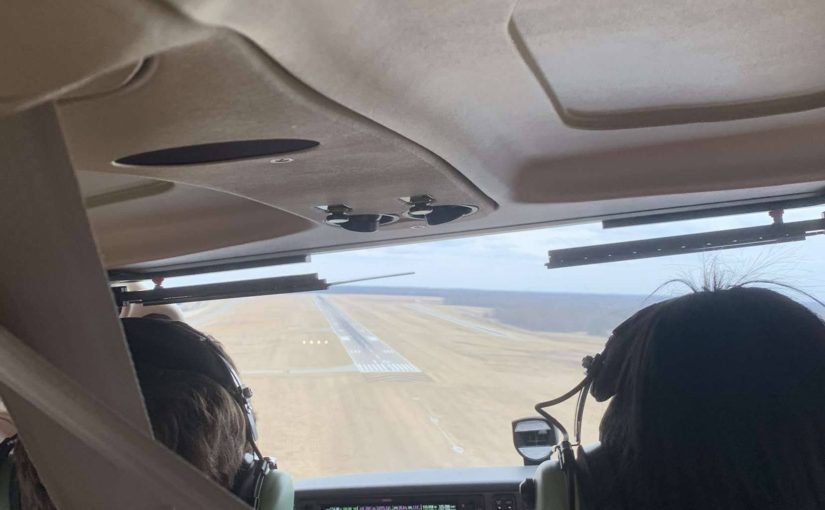
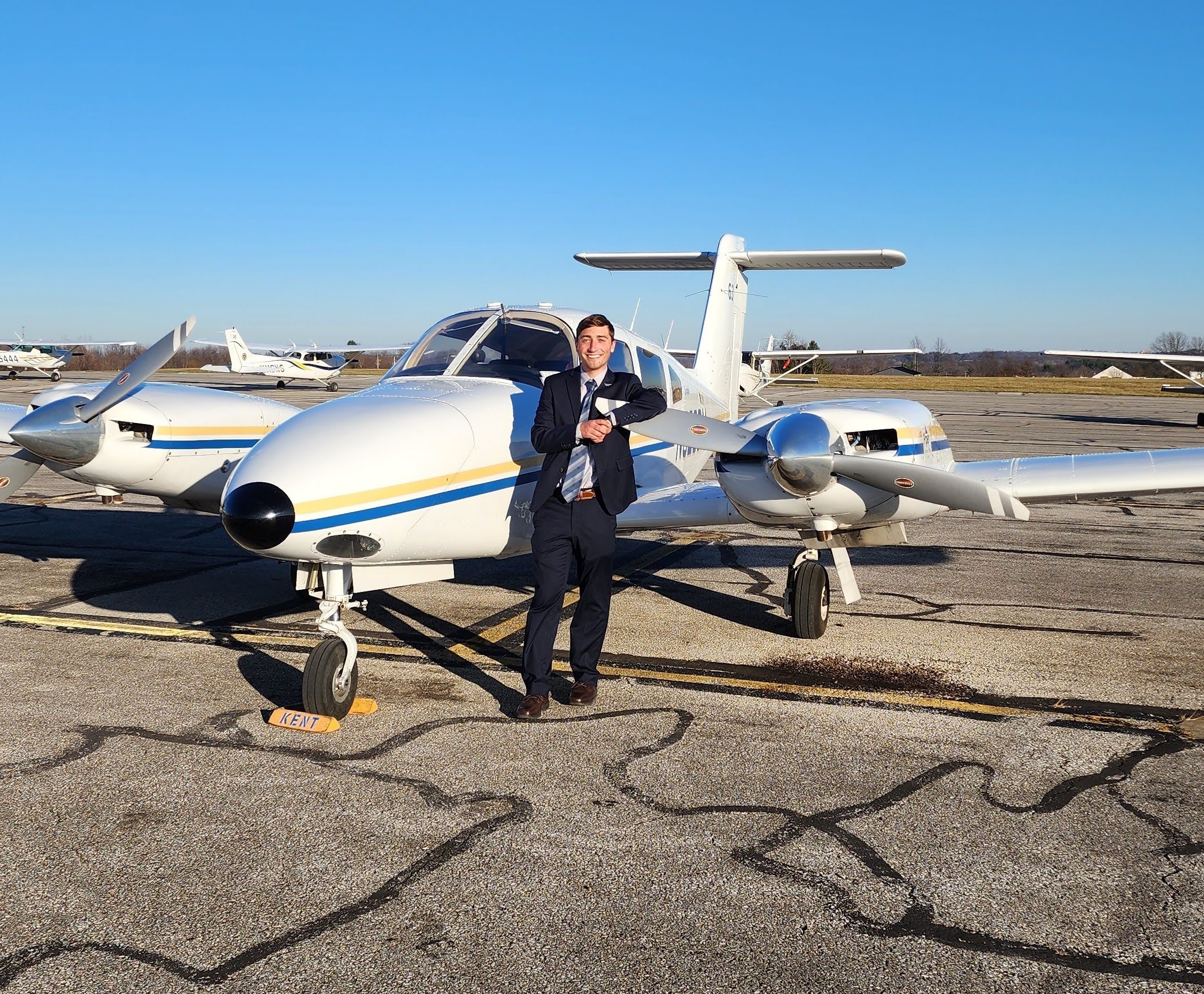
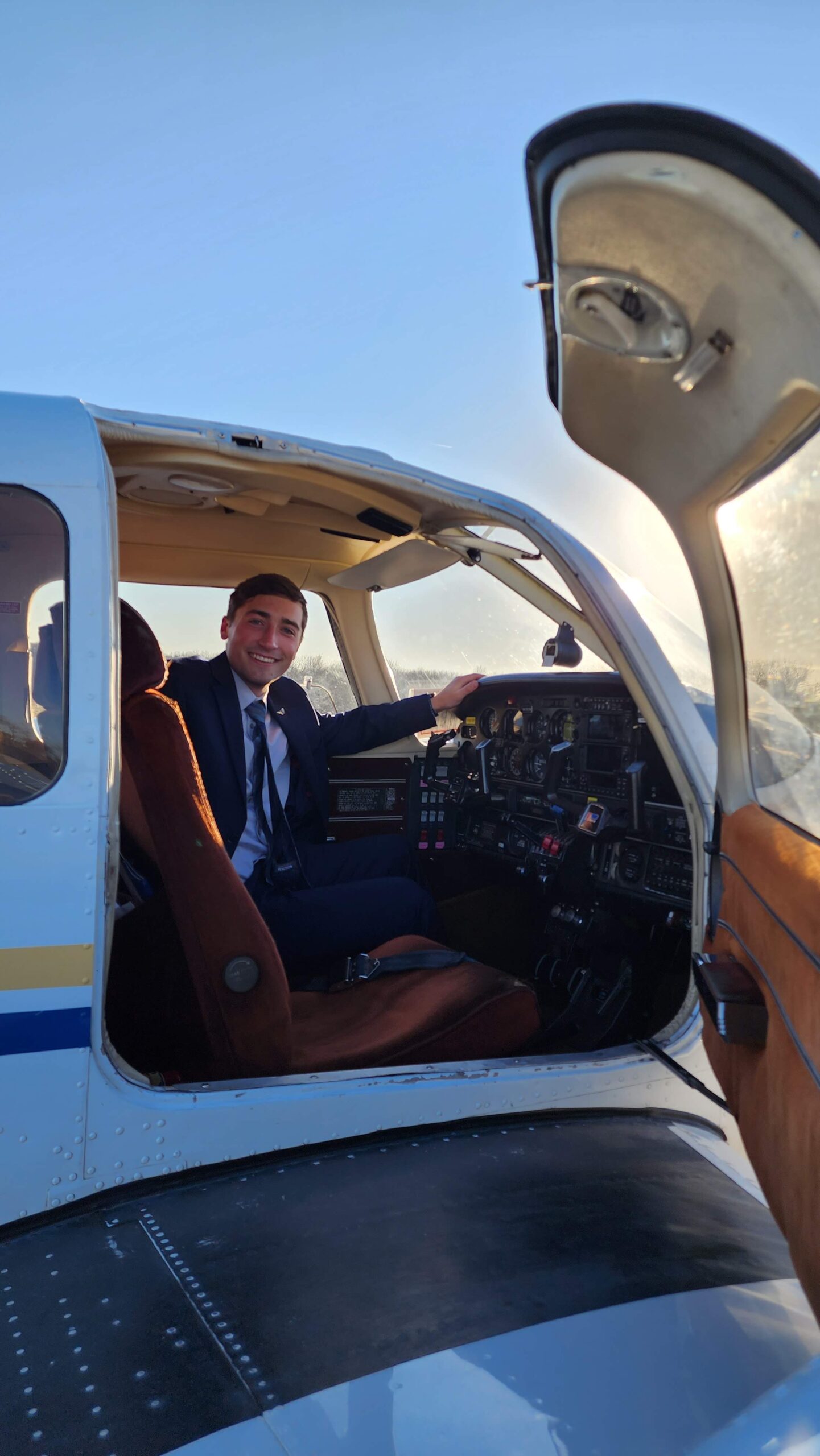
Nearly 3 weeks later due to the poor Ohio weather, a beautiful Sunday afternoon presented amazing weather for a checkride. After we started up and completed the run-up, I did a short field takeoff and headed to our SE practice area. Once we were about to cross into the practice area, my DPE moved the right engine’s fuel selector to the off position, and from there we did a full engine shutdown. Once my DPE was satisfied with my control on one engine, we restarted the engine and entered our area. In the area we did power on and off stalls, steep turns, slow flight and a Vmc Demo. All of these maneuvers went pretty well, especially my steep turns. My steep turn to the left was so good, my examiner tapped the altimeter to make sure it was still working. We then did an emergency descent down to 3,500’ and my DPE took the controls for a minute while I put on my foggles and got everything set up for the approach. We elected to do the RNAV 27 into KPOV. When we were on the base leg to intercept the final approach course, my left engine was pulled to idle and we conducted a single-engine approach. The approach went fairly well, getting no more than a 1 dot deflection at any point. After we landed, we took off again, but on this takeoff my engine was pulled to idle to simulate an engine failure on takeoff. We then actually took off and did a short field back into KPOV, where I nailed my point. I was really happy with this landing. We then took off and headed back to Kent, and I was finally a multi-engine rated pilot! The flight itself was 1.6 hours and there was nothing I hadn’t trained for. 

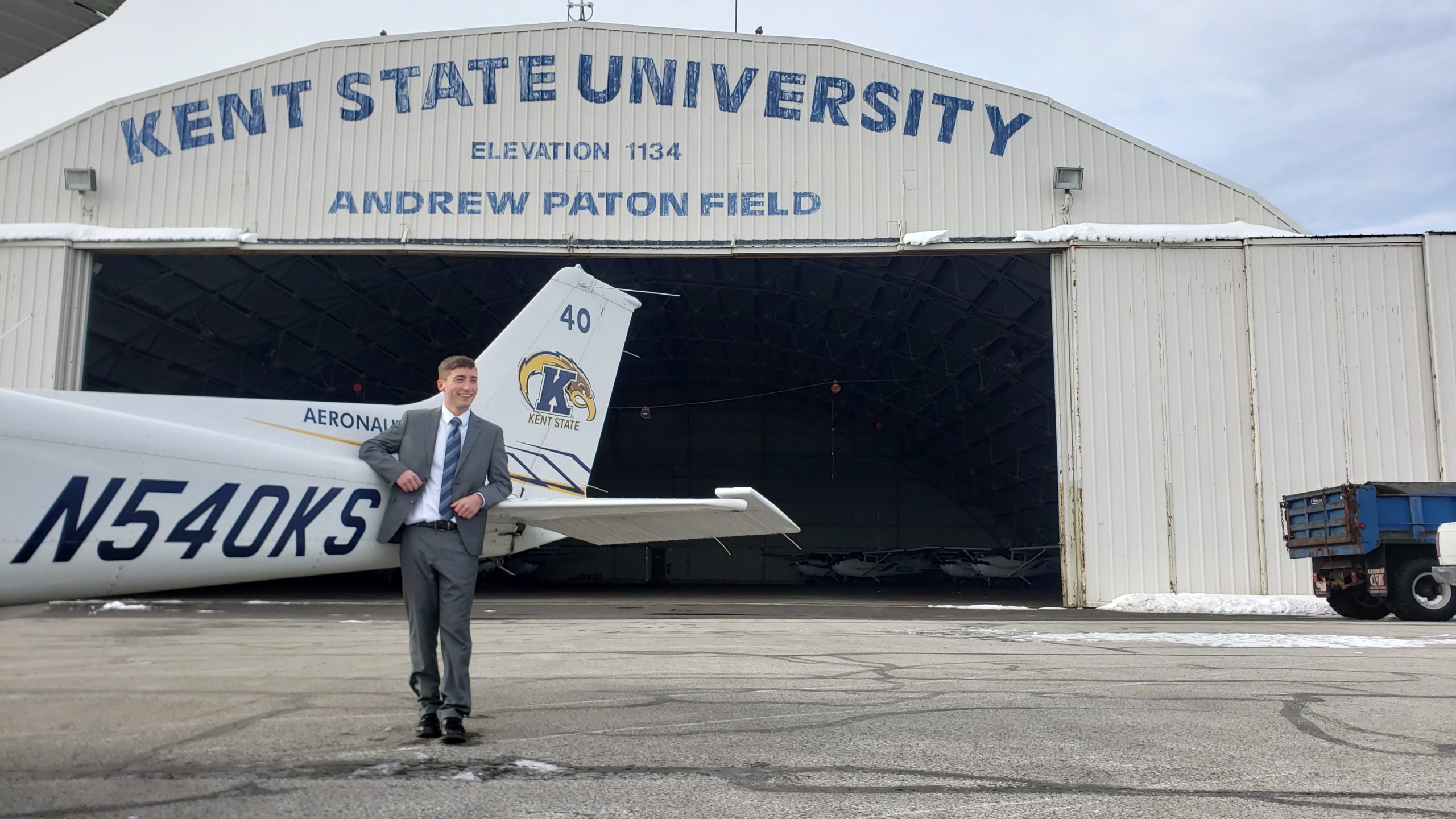
In addition to receiving my Multi-Engine in December, I just earned my Certified Flight Instructor Certificate on January 15th! We did the oral on Saturday, January 14th, but had to discontinue due to low ceilings. We had originally planned on doing the flight on the following Wednesday because the weather over the next few days was forecasted to not be the best. On the 15th around noon, the examiner sent me a message asking if I wanted to do the flight at 2:30 since the weather was significantly better than forecasted. Of course I said yes, and quickly got ready to head to the airport. 

The oral was only three and a half hours long and was one big scenario. The scenario started with the examiner portraying a role of a 60-year-old person wanting to become a pilot with no knowledge of flying, and I had to take him through all the steps needed to obtain his private pilot certificate. We first started off with the TSA endorsement, medical classes, durations, where to find an AME, and how to obtain a student pilot certificate. With the medical certificates, I was asked about disqualifying conditions, what a SODA is and what it can be used for. Staying with the aeromedical factors, we talked about the 4 types of hypoxia and the causes of each kind. In addition to hypoxia, we talked a lot about the gas laws like Fick’s Law, Boyle’s Law, Henry’s Law, and Dalton’s Law, and how they all related to hypoxia and the other aeromedical factors. Sticking with Henry’s Law, we talked about the rate of diffusion and how it can be related to flying. The main concern with this law was related to scuba diving and how it can cause “Bends”. 

We then moved on to controlled field operations and runway safety. I had to walk my DPE through controlled field operations and how I would fly from Kent to Akron-Canton. We discussed runway sign markings, hotspots, and where to find more information about them in the chart supplement. In addition, we talked about Land and Hold Short Operations and who can accept them and LAHSO ops per Kent’s SOPs. Lastly, with controlled field ops, we talked about nonmovement areas and where we might find them.

Throughout the whole oral, I was asked about which endorsements I would give the student when they reach each milestone in their journey to become a private pilot. With that, we also talked about what endorsements I would need to give to a student if they were to fail the written or the practical exam. Regarding pilot certificates, we talked a little about category and class with respect to the airmen and the airplane. To end the logbook and endorsement section, we talked about who a CFI can endorse and what medical certificate a CFI needs to hold depending on who the CFI is instructing.

I was also asked some systems and aerodynamic questions. I was asked about the starter and the engine systems of our planes. I was asked to describe what happens when we turn the starter to “start” and describe the process with all of the solenoids, impulse coupler, etc. I was also asked some basic questions about the functionality of the engine, the components, and how everything was connected. With aerodynamics, I had to teach through the power curve and how we can use it in everyday flight. 

As I took the oral exam, the fundamentals of instruction were spread throughout, covering professionalism, Maslow’s hierarchy of needs, laws of learning, defense mechanisms, and flight instructor responsibilities. Overall, I felt that the oral wasn’t that bad and was actually easier than my commercial and instrument checkride. 

On the day of the flight, the weather conditions were perfect. We had light winds and clear skies. One thing special about this flight is that the student is able to decide what we do and when we do it. Our examiner lets us make a plan of action which has to cover all of the tasks, but we can choose what maneuvers we do and when we do them. I started out the flight by teaching through the engine start, taxiing, and uncontrolled field operations. I did a soft field takeoff out of Kent and walked through the departure procedures and the corridors. During our climb to the practice area, I put on my foggles and did constant airspeed climbs. At our cruising altitude, I discussed some of the possible emergencies, and then I did my first simulated engine failure into Portage of the flight. Everything was going well until I was about 2800’ MSL. There were two planes in the pattern which were not an issue, but there were two other planes that were also joining the pattern, and my examiner and I decided to go around and do the sim engine failure later. In the practice area, I did chandelles, power-off stalls, accelerated stalls, steep spirals, and turns around a point. We then headed back to Portage to do the short field landing. We did a short field takeoff from Portage, and when we were 550’ AGL, my examiner pulled my engine so I had to make the impossible turn. Thankfully, the 172R that I was flying loves to float, so the impossible turn was very possible. We landed about 1⁄3 of the way down the runway, made a 180 on the runway and departed again. We then headed back to Kent, discussed a few more emergencies, and did a soft field landing, and then I was now officially a CFI! I have already started CFII and my goal is to have it done in the next two months. 

I’m still waiting to be hired by Kent as a CFI, but hopefully, that should happen within the next few weeks. I’m graduating in the spring and then from there, I will be instructing full-time until the Fall of 2024 when I will hopefully reach my 1,000 and be able to head to the airlines. I’m nervous to start teaching people how to fly, but at the same time, I’m excited to show new pilots just how amazing aviation is.
 

Officially A Commercial Pilot!

Hello again everyone! There have been many recent achievements in this community and I would congratulate each member again! On Tuesday, May 24th, 2022, I became a Commercial Pilot! It’s crazy to think that a year ago I hadn’t even taken my private pilot checkride and now I can fly for compensation or hire.

The oral portion of the exam took place on Friday, May 20th, 2022, and lasted almost a hefty three hours. The first half an hour consisted of looking through the maintenance logbook to ensure all inspections were completed and to determine when they were next due. Once we were finished with the maintenance side of things, we dove into my pre-planned cross country. I was told to plan from 1G3-CYYZ, but the route I took was 1G3- (overflying) KBUF-CYYZ. I then explained why I chose this route, which was because flying over Lake Erie would put me out of power-off glide distance for about 20-25 miles. He then asked me to explain how I got my power-off glide distance, and I responded by showing chart in the information manual. We then talked about the altitude I picked and why I did. This then led to fuel burn, hypoxia, maximum elevation figures, and minimum altitudes as defined in 91.119. Since we were looking at the sectional for the route, he asked me some sectional symbology and airspace questions with the airspace weather minimums. I was then given a few scenarios using common/private carriage and wet/dry lease, and was asked if these scenarios would be legal as a commercial pilot. We then went into the power-off glide chart again and read the notes for it. Two of the notes for this specific chart were gear up and propeller fully decreased. This then led into the systems of the plane. I had to explain how the gear in the piper arrow worked and describe which way the hydraulic pump worked when the gear was brought up/down, what held the gear up, and a few more things about the gear. We then moved to the propeller and I explained the propeller governor and the flyweights, and what happened when the prop lever was moved back and pushed forward. We talked about aerodynamics a little and even some requirements for entering and landing in Canada. This then concluded the oral for the day.
We came back a few days later for the flight. When the day of the flight came, the weather was beautiful and ideal for the flight. Light winds out of the NE on the surface which became light and variable aloft. The air was smooth and there was a layer of clouds at 7500’ MSL. Thankfully, these stayed just far enough south that they didn’t interfere with the simulated xc. We departed from Kent, to the NE, to Buffalo, and did the first few legs of the xc. Once we were about 25nm from Kent, we entered our northeastern most practice area, where we spent most of the flight. We set up in the area, transitioned into slow flight, and then began the power on/off stall series. Once those were completed, my examiner was feeling “hypoxic” and only had 15 seconds of consciousness left, so we entered an emergency descent and leveled off at 4500’. From there we did steep turns and chandelles. Once we were leveled off from the chandelles, my engine was failed by the examiner, so I had to find my field and then circle to land. We ended up making the field and landing at 7G8 (Geauga County). We departed again, climbed to 2200’, did 8s on pylons, and then continued to KPOV (Portage County) to do the landings. We performed a short field landing and a power-off 180 at POV and then returned to Kent and did a no-flap landing. 2.0 hours after we took off, I was officially a commercial pilot.

Overall, there were no surprises on either the oral exam or the flight. Everything was right out of the ACS. Since I received my instrument rating on January 21, 2022, I have flown 56.4 hours, putting my total to 211.0 hours of flight time. This summer I hope to complete or at least start my multi-engine add-on, but I might have to wait a while for an instructor, since we currently have a shortage of MEI. I will be starting the CFI course in the fall semester, followed by the CFII course in the spring, and then graduating a year early in the Spring of 2023.

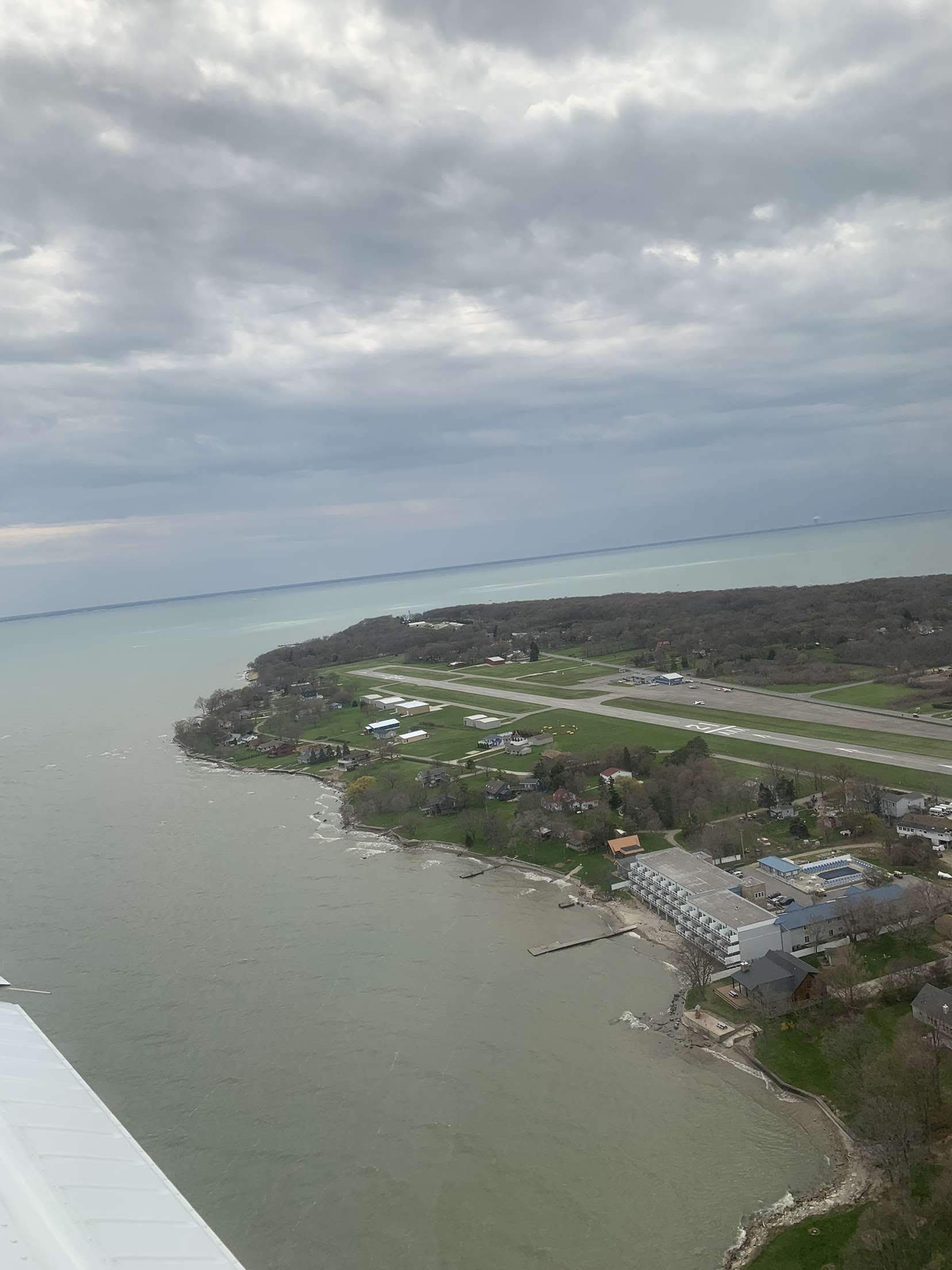
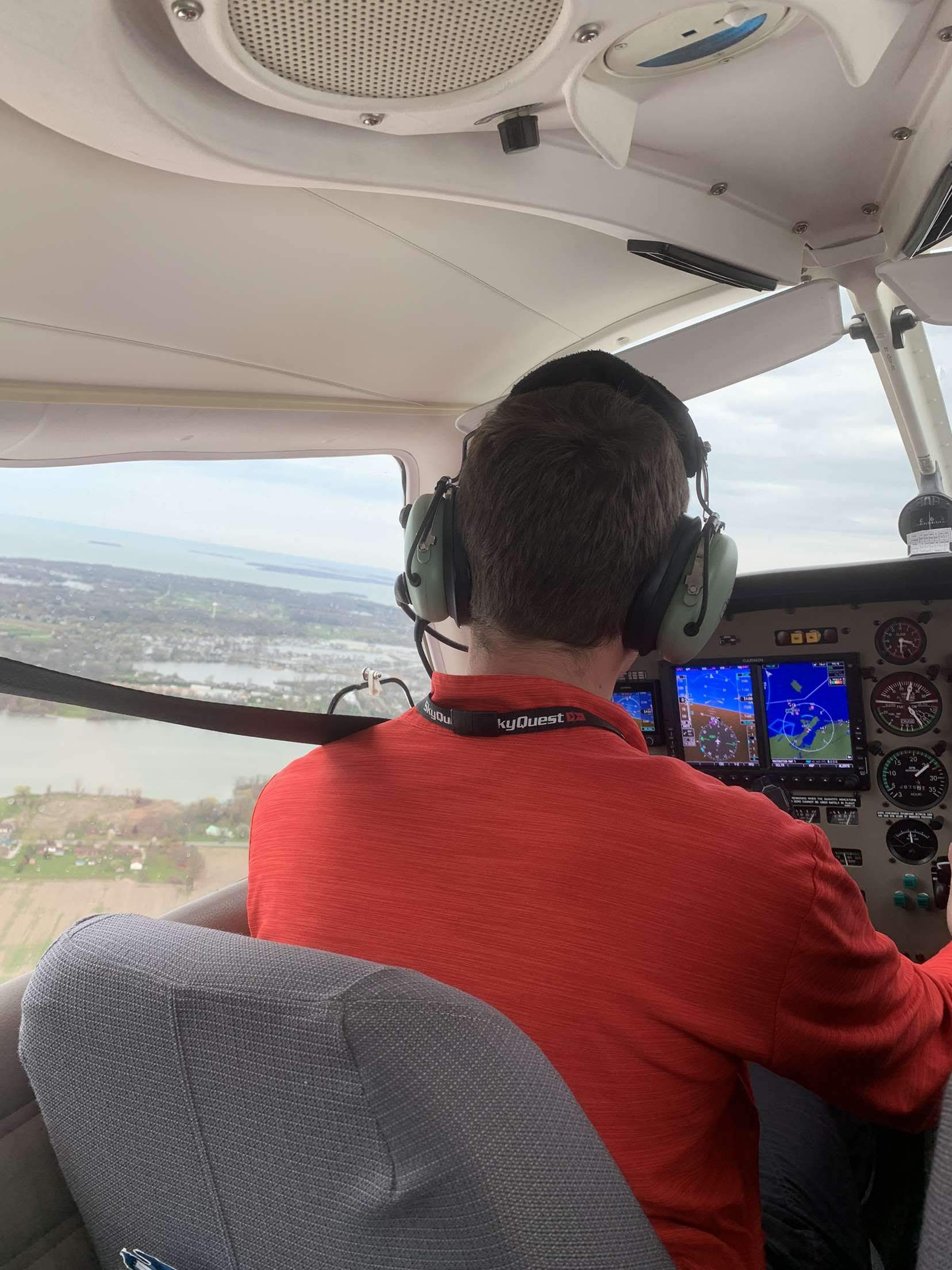
This semester was my busiest yet. I was taking 18 credits while working about 15 hours a week. Most days I would wake up at 5 am to work at 6, have classes all day, then I would finish my flight block at 6:15 pm. I wouldn’t get back to my apartment until nearly 7 some nights, then I had to cook dinner, leaving only an hour or two to do school work so I could be asleep at a decent hour to do it all again the next day. Even though it was my most hectic semester so far, I still got to do some really cool flying adventures. One of my friends from Kent knows a guy who has a Piper Navajo, so we flew up to PCW (Port Clinton) and had lunch at the on-field diner. Later in my flight course, I did a quick cross country to PCW, then I did a quick hop to 3W2 (Put-in-Bay), which is an island on Lake Erie. This was the most challenging airport I’ve landed at so far because of the “short” runway, 50’ trees near the runway, and gusty conditions due to being right next to the lake. Since I had some solo time to burn, I decided to fly down to Ohio State University to visit a couple of my high school friends and have lunch with them. Lastly, I did a flight in great IMC conditions. For this flight, I flew with my instrument instructor and we logged 1.4 of actual IMC. We did the ILS 7 into KLPR (Lorain County), and we broke out the clouds at about 400’ ALG and then reentered the clouds at above 200’ AGL on the departure end. That was my first time taking an approach that low in actual IMC and I can only imagine what it would have been like to take it down to minimums.

Here is a list as of 5/29/22 of my total times if anyone is interested

Total Time: 212.2

Solo: 60.1

Complex: 22.2

Technically Advanced Airplane: 70.4

XC: 61.5

Night: 18.1

IMC: 5.8

Simulated Instrument: 34.1

Dual Received: 148.7

PIC: 152.6

Flights: 163

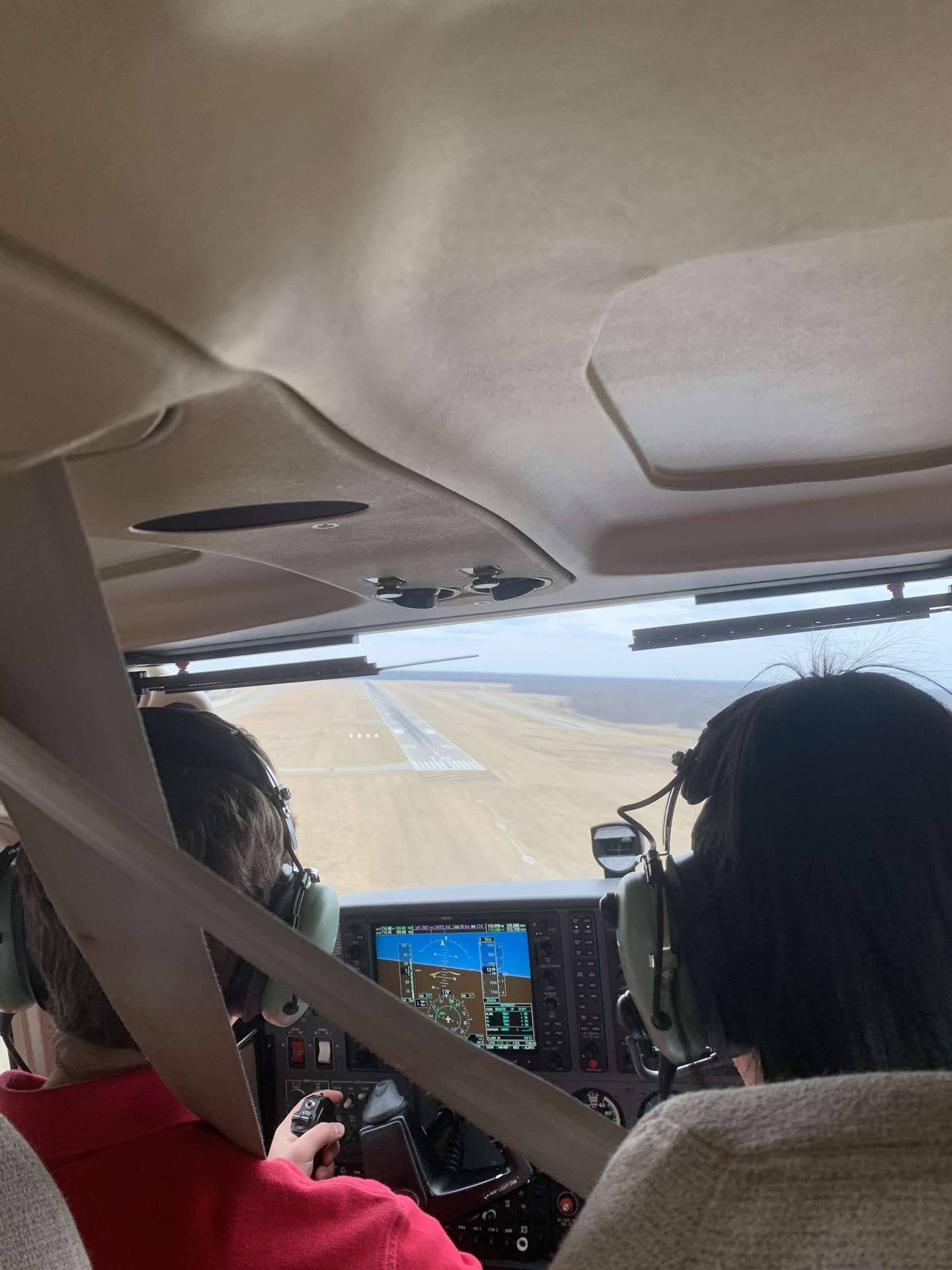
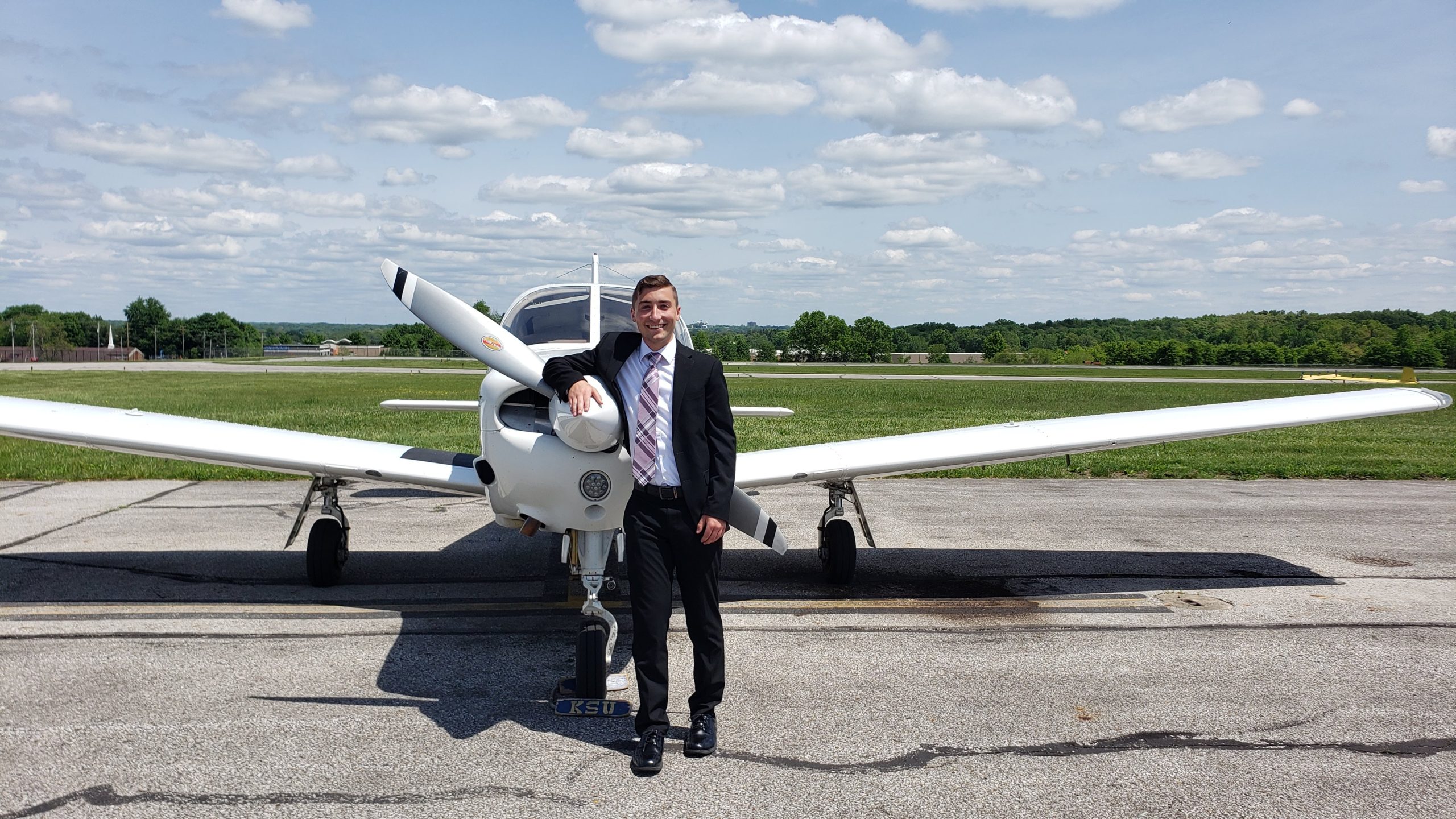
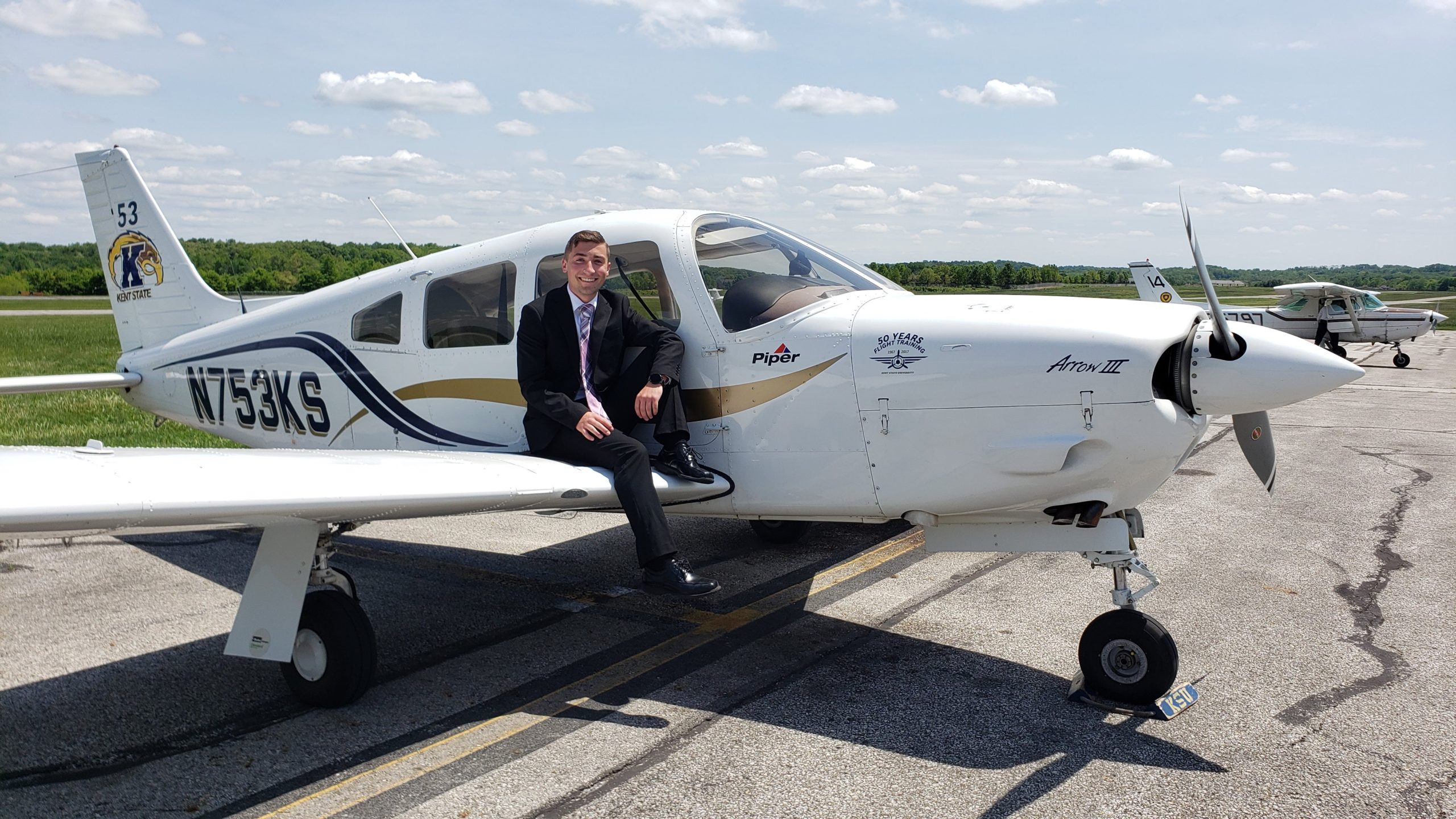
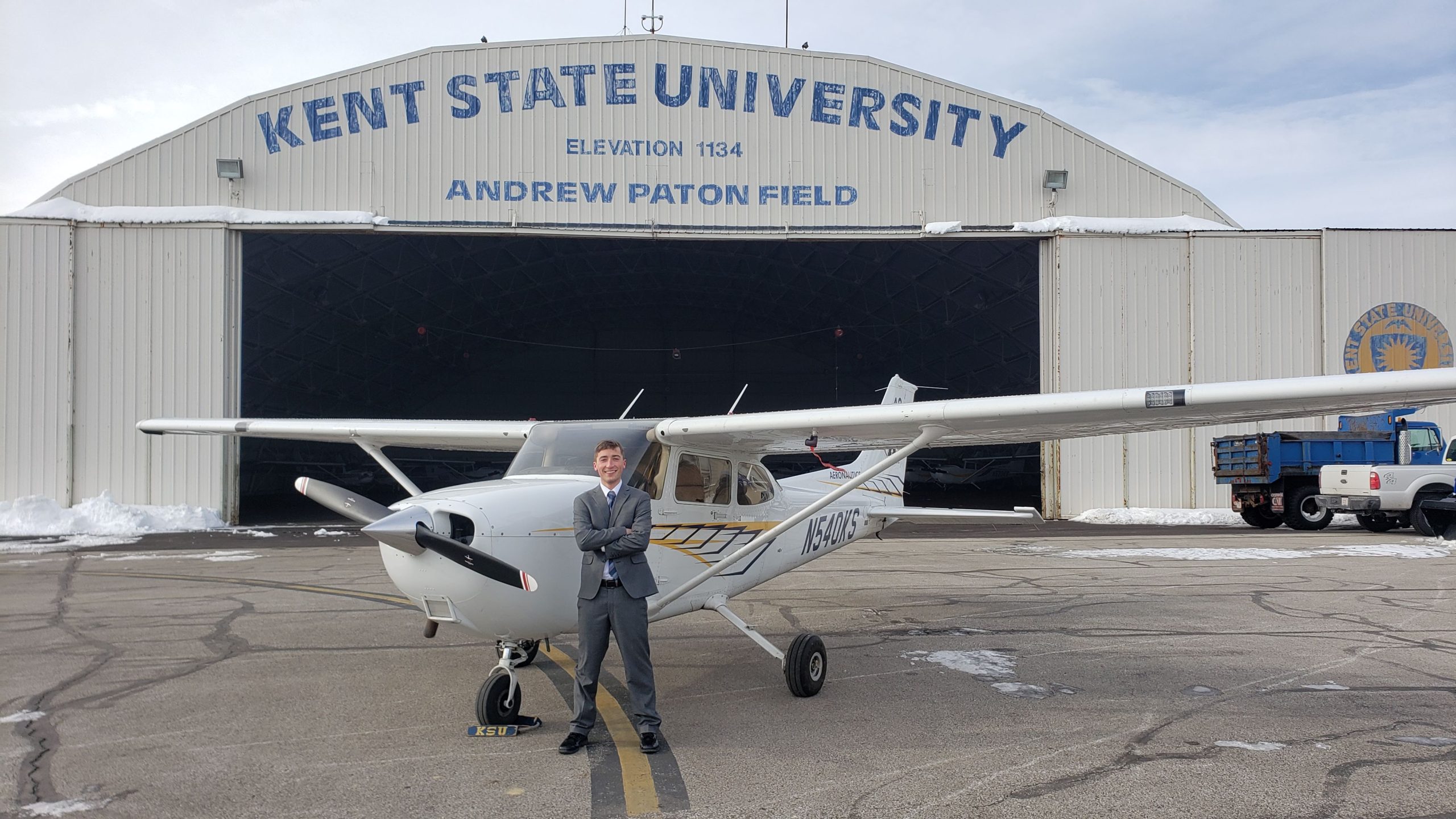
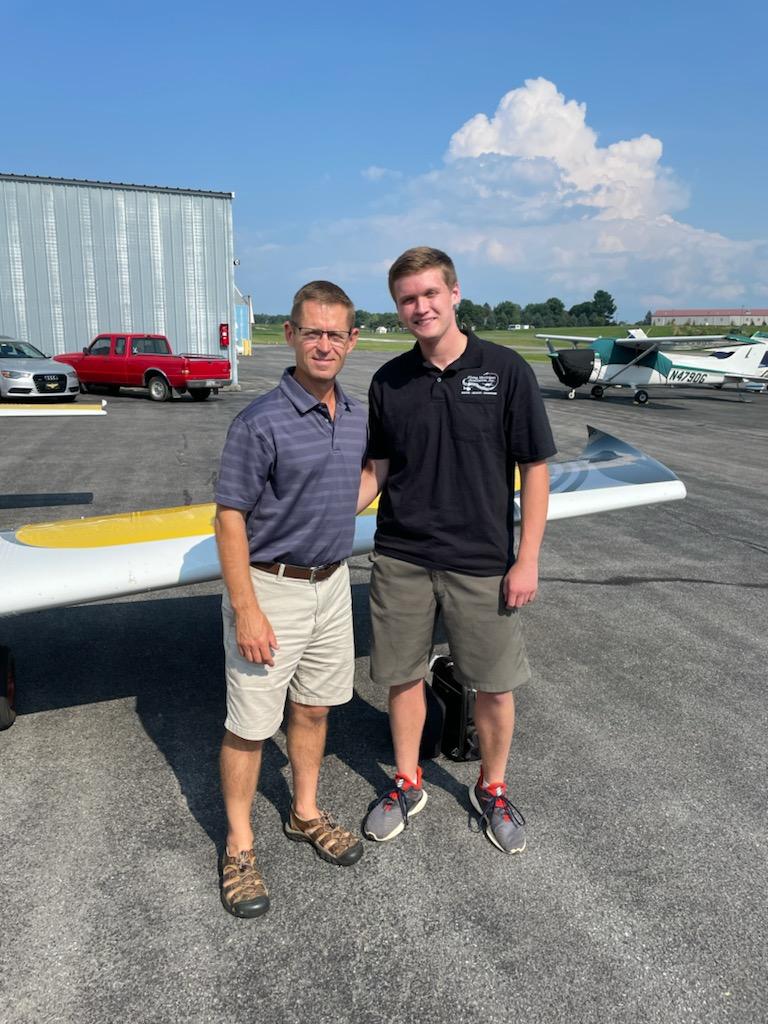
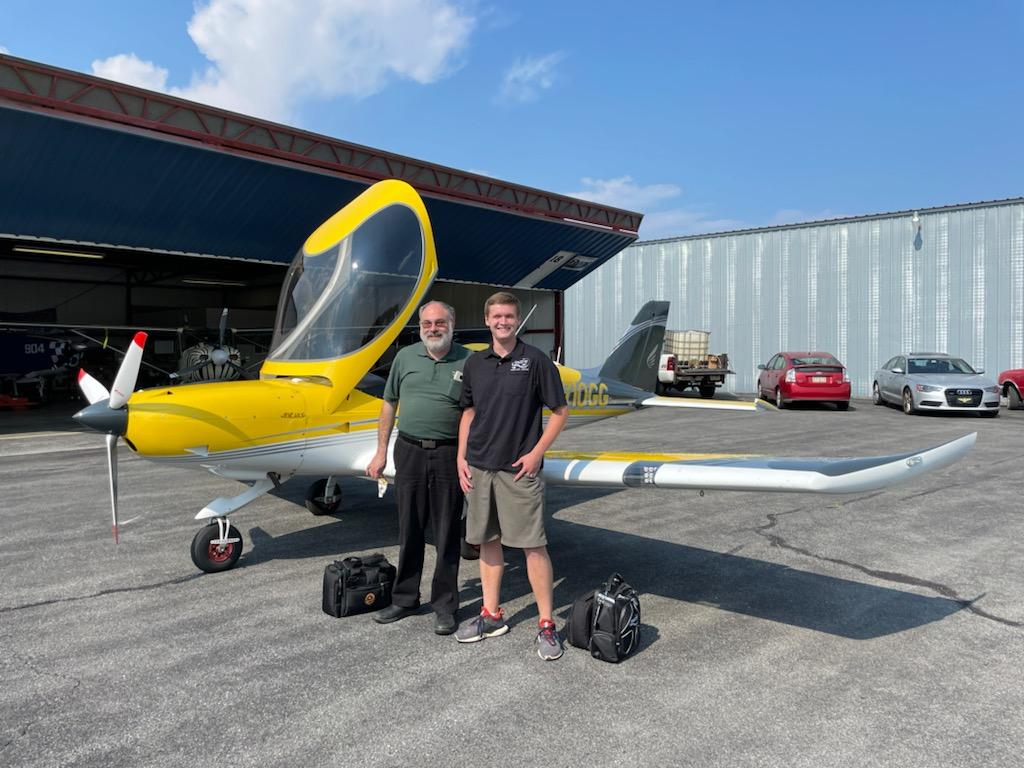
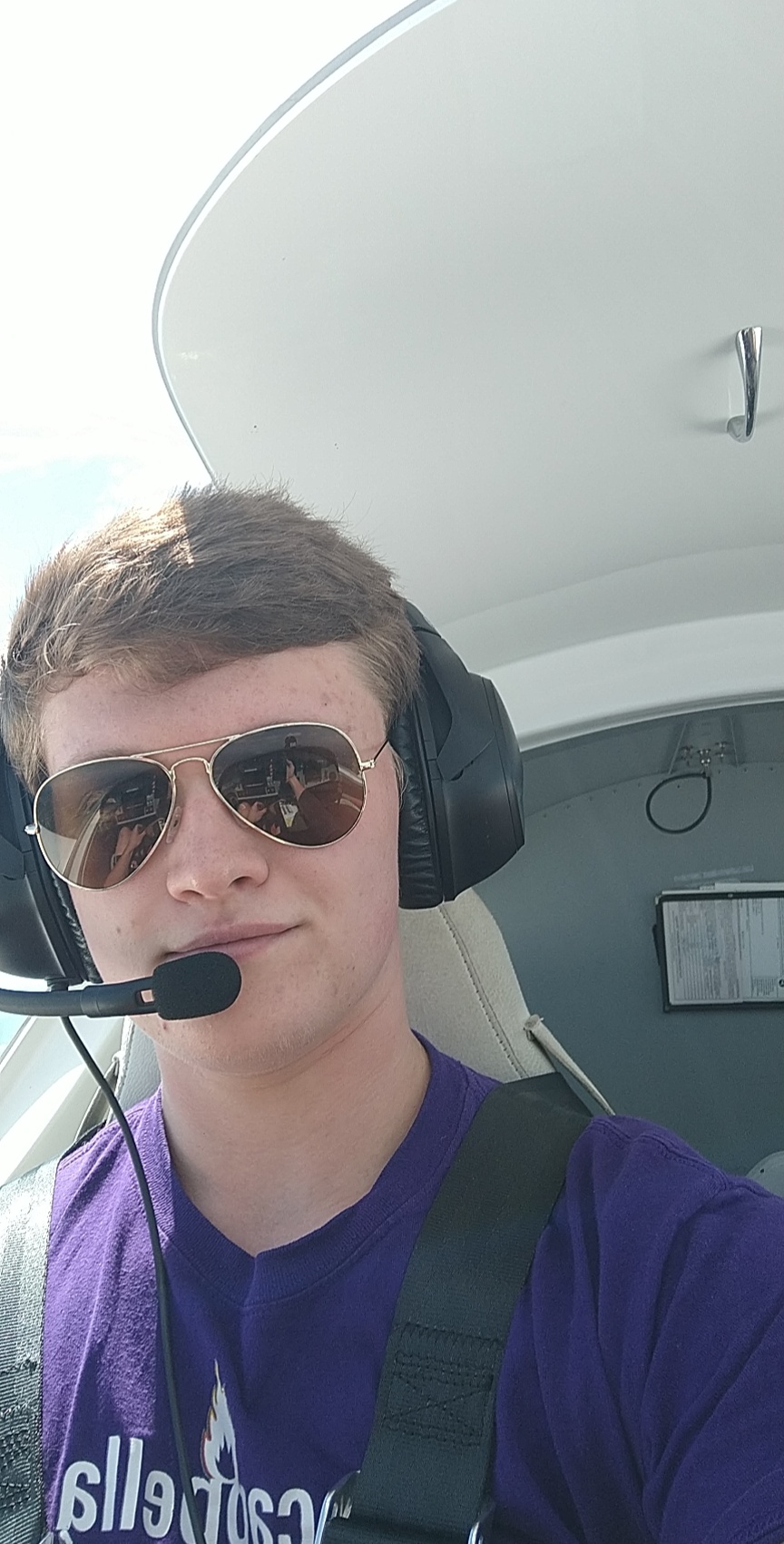
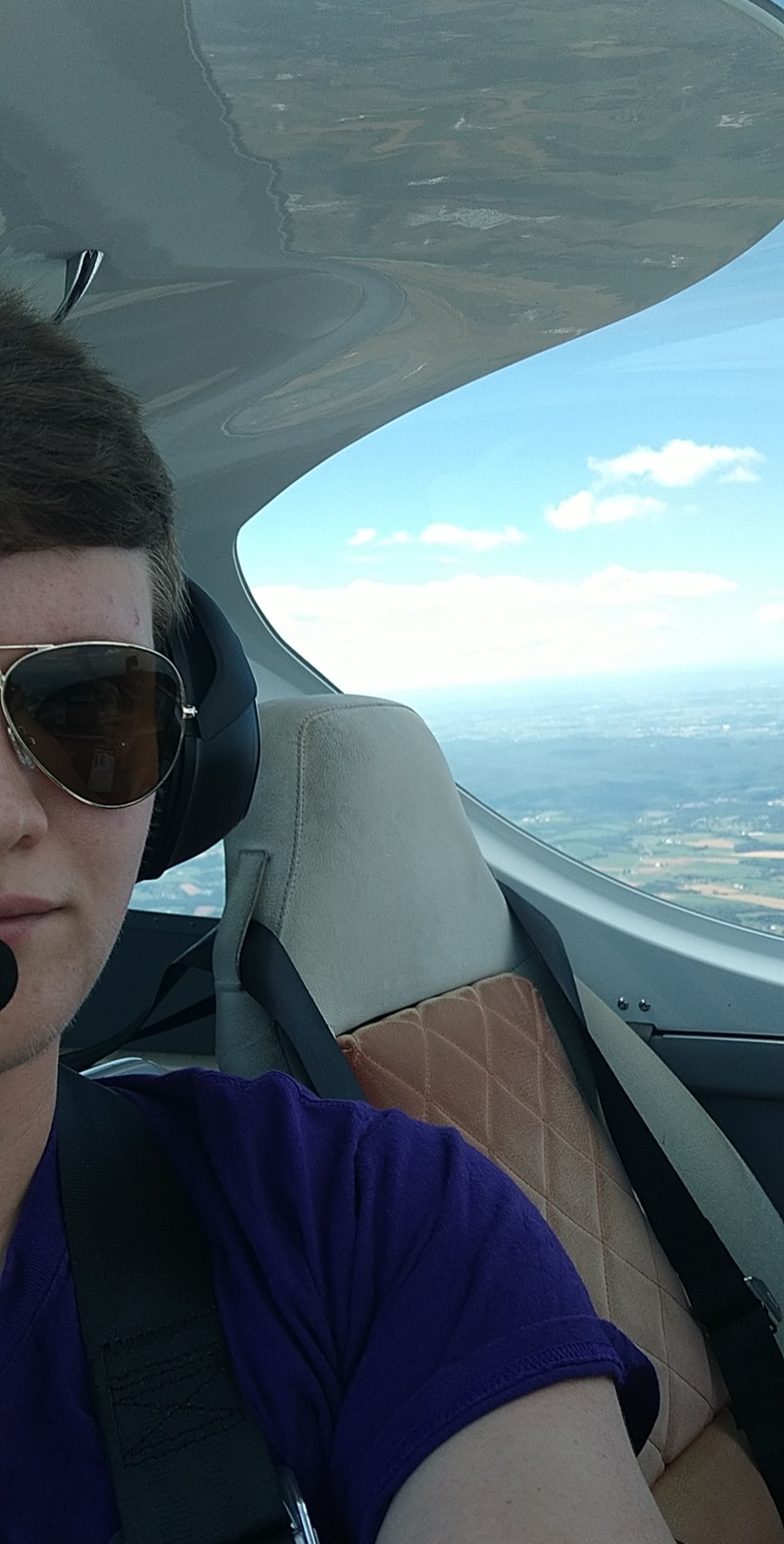
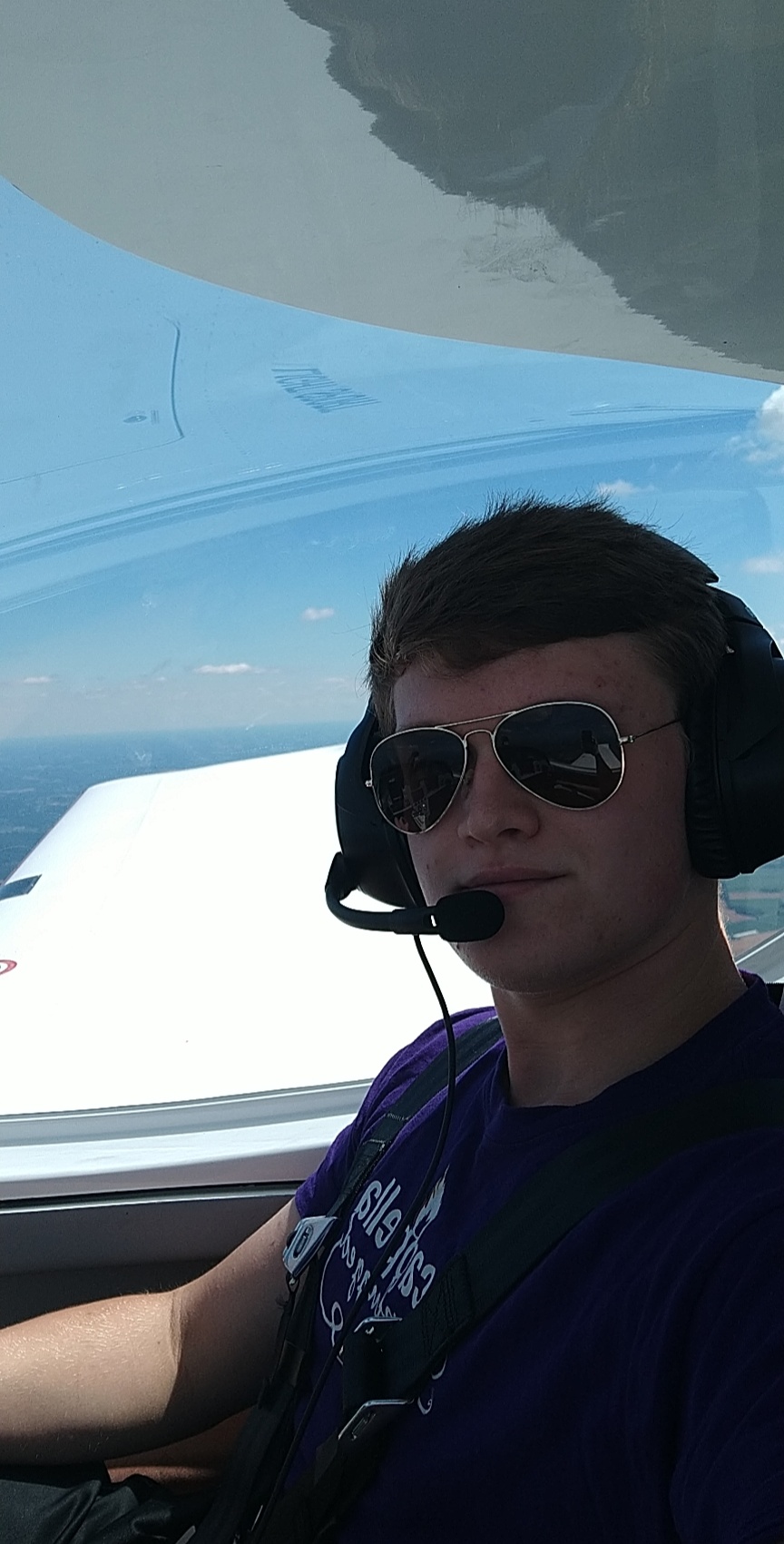
Pictures from my checkride, then a few of me in action taken a backseater in a 172S and a PA-28R-201, and a picture of Put-In-Bay’s Runway

University, Flying, ROTC, and Other Adventures…

Hello Everyone!!!

It’s been awhile since you have heard from me, but I have been doing a lot in the time that I have been away. Unfortunately, I haven’t gotten to fly as much as I have wanted due to school and money, but I have been flying some with my instructor some last fall and over Christmas break. While home over Christmas, I finally got the opportunity to take my family flying. It was a dream come true, and a super cool thing to be able to do. Everyone loved it, and I have included pictures down below, and a video of a simulated soft-field takeoff I demonstrated to my brother while he was riding with me. He is also somewhat interested in flying. (His and my sister’s eyes are closed in both photos, but those are the only pictures I got!)

I have some pretty big plans for my next steps in aviation. I have applied to AOPA’s advanced scholarships so that hopefully I can get my instrument rating this summer, along with a tailwheel endorsement. I also already nearly have my complex-high performance endorsement, which I worked on last Summer and Fall in my instructor’s Navion. He says I only need about one more hour before I get the endorsement. My instructor no longer has the Bristell that I learned to fly in, so I will most likely be doing my instrument training in a 172 or an Archer, with a different instructor, as my flight instructor is planning on getting a Super Decathlon so that he can focus on aerobatics, formation, and tailwheel training, as that is where is passion lies. So, I plan on doing my tailwheel training with him in the Super Decathlon or his L-16, and the instrument training with someone else. I can still fly the Bristell as well, but it is more expensive to rent, and I have to drive to Lancaster now to do it, which is an hour from my house, and about three hours from Penn State, so it isn’t very plausible. So, I’m hoping I can get checked out in an Archer or 172 soon so that I can get my instrument training done and be able to rent pretty much wherever I want.

School has been going well for the most part. I do not remember if I mentioned this in my last post, but I switched my major to Plant Science with a minor in Entomology, as I have decided that I want to be a Ag. Pilot one day when I get out of the Air Force. I finished out last semester strong, and got down a solid GPA. I also have been very active in AFROTC, and I would say that it is my favorite thing about college so far. I took the oath of enlistment and contracted last week, which effectively activated my scholarship.

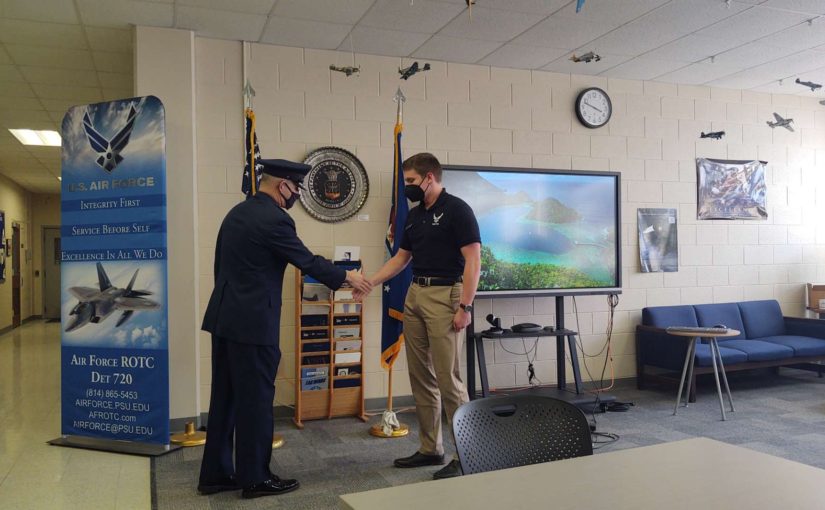
This is great, because now I am finally able to get my bi-monthly stipend, which should help out a lot with money issues that have kept me from flying as much as I have wanted. I included a picture from my contracting ceremony below.

I hope everyone has a great week!

Cheers,

Jake Myers

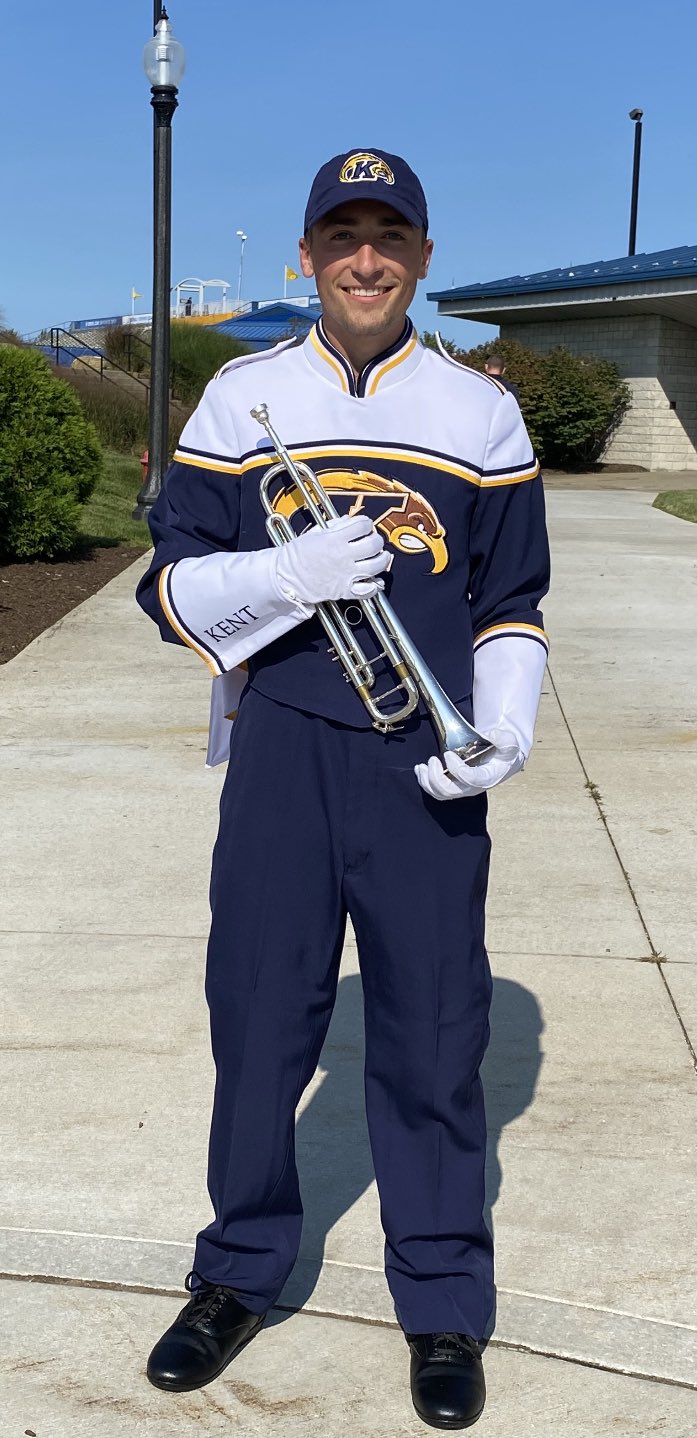
(Here’s a link to my band page as well. We have been gigging on the weekends, and I played Friday night for and event at my ROTC Detachment, but there isn’t much news other than that about my musical endeavors.)

https://www.pyxusmusic.com/

https://music.youtube.com/channel/UCm8XKL4Y-EdNV3qCzANVQkQ

Instrument Checkride Complete

Since my last update, I have been very busy for me between flying, work, school, and music. All of the hard work and time spent on everything has finally paid off and left me with some awesome memories.

On January 21, 2022, I passed my instrument checkride with an A overall which is a very high score coming from the chief of the instrument course. This flight consisted of 3 approaches, ILS 25 KCAK, VOR-A with a lap in the hold into 1G3, and then the RNAV back into 1G3. We also did a 14 mile DME arch off of the ACO VOR and then did some unusual attitudes. The oral part of the exam was about 3.5 hours and the flight was 1.7 hours, all at night. Throughout the course, I got to explore some bigger airports like KCLE, KPIT, and KIAD. On my long instrument cross country, I flew to Washington Dulles which was an amazing experience. It was really cool to see my plane next to a Saudian 777, numerous business jets, and experience the operations at a large airport.  One of the benefits of living in Ohio is that we get lake effect. During the winter it sucks because it brings icing conditions so we are unable to fly, but during the warmer parts of the year, it brings excellent instrument conditions. I was able to log 3.7 hours of actual IMC during my training and had multiple flights of nearly an hour of IMC each. Overall, my training for instrument was very rewarding and the most important rating I will ever receive. Learning how to use the G1000 and fly without looking outside was difficult but I know it will prepare me for the future. 

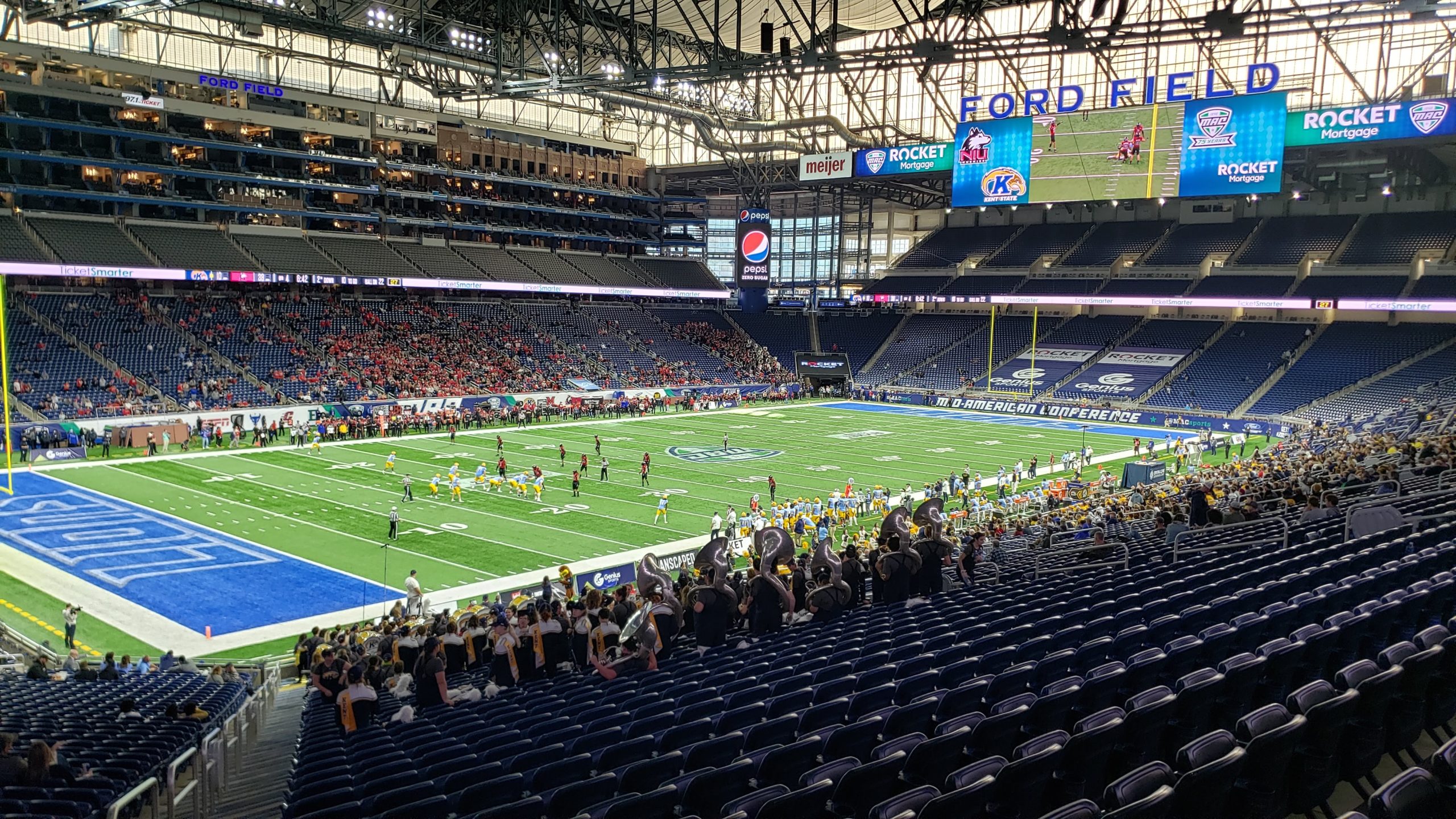
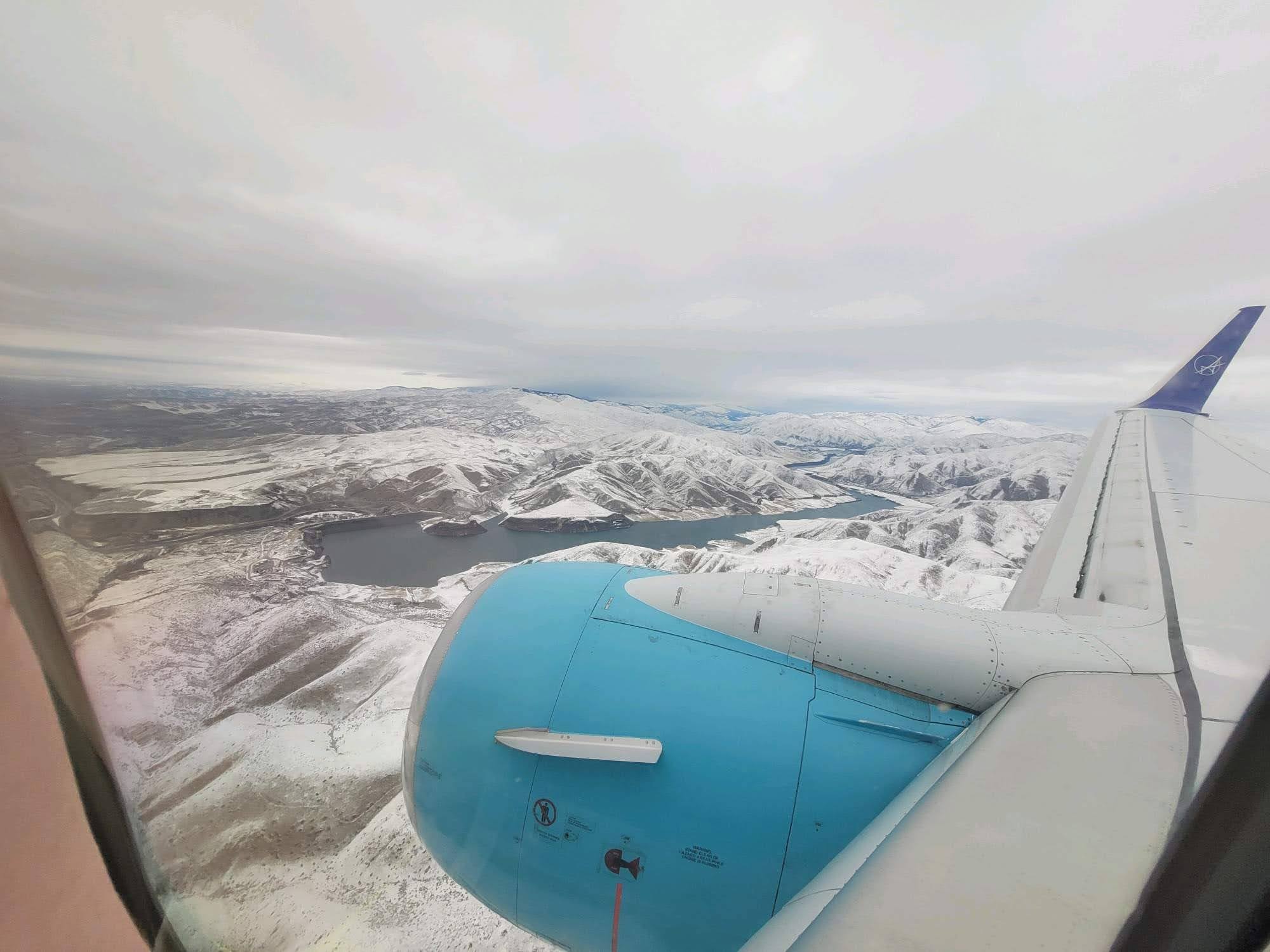
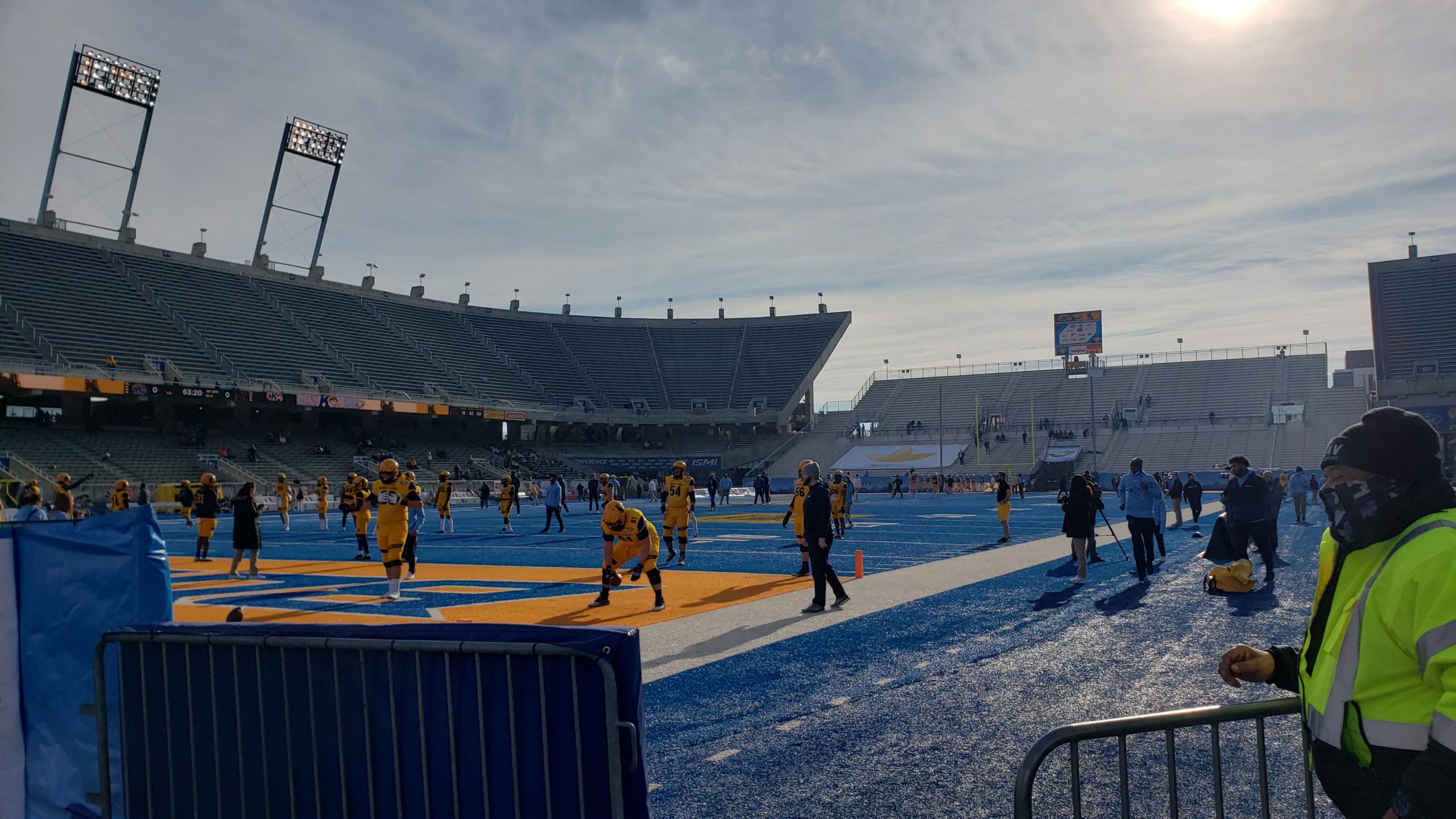
December was a very busy month for me music-wise. Kent State had a great football season where we ended up going to the MAC championship game in Detroit so I got to play on Ford Field. Unfortunately, Kent lost the game but it wasn’t the end of my season yet. Kent also won enough games this year to be eligible for a bowl game. We were chosen to play in the Famous Idaho Potato Bowl in Boise, Idaho. Fortunately, Kent State chartered us a flight from Akron-Canton to Boise so we didn’t have to be on a bus for nearly 40 hours. This was a four day, three night trip so we were able to explore the city of Boise in our free time. Kent did lose this game as well but the experience made the trip well worth it. On the flight, many people in the trumpet section kept asking me what was happening when they would hear a strange sound. My last accomplishment in music for the semester was receiving a callback for the Bluecoats Drum and Bugle Corp. I was not able to attend the callback camp because I will not be able to march this summer because I have to take 2 summer classes so I can graduate a year early. Now that I know I can get a callback, I am very confident that I have the potential to be offered a contract for the summer of 2023. 

In addition to traveling with the marching band, I also traveled to Orlando, Florida with about 10 members of the Kent State Alpha Eta Rho Aviation Fraternity for the national conference. This conference was a great experience because I got to know the people in my group better, but I also got to meet a lot of new people from other schools. I also got to listen to Winston E Scott who was a Navy captain and astronaut. I was really excited when he told everyone that he was a trumpet player and originally went to college to study music. After his speech, I asked him more about his music career and we talked about our favorite jazz trumpet players. We also talked with representatives from multiple airlines where we learned a lot of great information about each airline and what to expect at different airlines. 

I currently have 158.8 hours of flight time and am working on both the Commercial 2 and Commercial 3 courses at the same time to hopefully earn my commercial certificate by the end of the semester. I will be doing Commercial 2 in the 172S and Commercial 3 in the Piper Arrow III. My hope is to get my multi-engine add-on over the summer and then do CFI/I in the fall semester. I will be going back to Sky Quest this summer to gain more experience in the aviation field. I have my work cut out for me but I am excited to see it all pay off in the upcoming years. 

First 100 (and then some) Hours!

Hello! I’m here again to give everyone an update about my flight training and my summer with Sky Quest!

First of all, this summer was crazy. Between flight training and work I hardly had any free time, but it was definitely rewarding because I knew I was spending my time working hard and learning a lot. I completed my Commercial 1 flight course at Kent State. This course added 48.4 hours to my total flight time, putting me well over the 100 hour mark. Out of these 48.4 hours, 25.5 of them were cross countries, and 27 of them were solo. I had 6 cross countries in the course:

Kent State (1G3) – Latrobe (LBE) – Kent State (1G3) / 2.8 hours/dual/night

Kent State (1G3) – Findlay (FDY) – Erie (ERI) – Kent State (1G3) / 4.7 hours/solo

Kent State (1G3) – Northeast Ohio Regional (HZY) – Wheeling (HLG) – Kent State (1G3) 2.3 hours/dual

  • This flight was difficult to mark as a lesson. At Kent State, we have a Training Course Outline for each flight course and the cross country lesson I was on called for the airport to be 100nm away from Kent. We were originally going to go to Buffalo, but a thunderstorm developed off of Lake Erie and we decided to divert to HZY so we didn’t fly into the thunderstorm. Unfortunately, HZY is only 49nm from 1G3, so I could not log the first hour of flight as cross country. The total flight was 3.3 hours but only 2.3 were cross country. 

Kent State (1G3) – Buffalo (BUF) – Clarion (AXQ) – Kent State (1G3) / 4.8 hours/dual

Kent State (1G3) – Scranton (AVP) – Franklin (FKL) – Kent State (1G3) / 6.1 hours/solo

Kent State (1G3) – Fort Wayne (FWA) – Port Clinton (PCW) – Kent State (1G3) /4.8 hours/solo

The best moment from this course was when I did the flight to Buffalo, New York, because my instructor and I did the Niagara Falls tour from the sky. Having this opportunity was very cool because I believe this is what general aviation is all about; being able to see things from the sky and having the opportunity to do things that most people can’t. Compared to private, which took me about 9 months to complete, commercial 1 took significantly less time to complete, only two months! In addition to the flights, I also completed 24 ground lessons and 6 hours of simulator time. 

On top of my flight lessons, I was also working at Sky Quest over the summer, which was an absolutely amazing learning experience. At Sky Quest, I did a bit of everything. I helped out with maintenance under supervision, I ordered and inventoried parts, and I even worked in dispatch for a few days. I also had the opportunity to fly in a Challenger 350 from CLE to CGF. It was only a 17 minute flight, but it was still awesome to fly on a private jet. It was unlike any flight I have ever taken before. I looked forward to going into work every day, because I always knew I was going to learn something new. On my last day of working there, I went to thank the President of the company for providing me with the opportunity to work there this summer. While we were talking, he told me how highly everyone talked of me and even offered me a job for next summer!

One of the best parts about becoming a private pilot is getting to exercise the privileges of carrying a passenger. This summer I was able to take my girlfriend as my first passenger. We took off from Medina (1G5) and flew north over Cleveland Hopkins and then flew around downtown Cleveland. I figured the easiest way to do this was to do a touch and go at Burke Lakefront (BKL) because it is on Lake Erie, which is right next to downtown. My girlfriend was very surprised with how fast things happened on a touch and go landing. She didn’t expect it to literally be a touch and go. After we took off again from BKL, we flew down the coast of Lake Erie for a little bit as the sun was beginning to set and then headed back south towards Medina. We both had a great time flying together, but we didn’t have the best views because it was hazy and the visibility was around 6-7sm. But once we were pretty close to the city, all of the buildings looked cool from the sky. I can’t wait to take her back up on a night flight so she can see all of the city lights at night.

A few weeks ago, one of my friends from high school that had moved to Florida came back to Ohio to visit so of course I had to take him on a flight. We took off from Medina once again, but this time to the South, then started a turn to the West. I then showed them some maneuvers like steep turns, power on and off stalls. I then tracked to the Dryer (DJB) VOR then proceeded North along the shore of Lake Erie where we flew at 1,500’ MSL to get some cool views. Unfortunately, we were not able to do a tour around Cleveland because the airshow was happening, so we turned South and headed back towards Medina to end the flight. The flight ended up being 1.3 hours and it was a beautiful day to fly. No clouds, light winds, and limitless visibility.

Now let’s get to where I am currently. I have started my Instrument Rating, and I am progressing through it at a good pace. I am hoping to take my first stage check in the next week or two, and then I will be able to start flying in actual IMC. For now, I have been using the foggles on all of my flights. So far I have done patterns A and B, Vertical S’s, DME arcs,  power on/off stalls, steep turns, and unusual attitudes. Once I complete the stage check, I will be able to start learning approaches, which I am very excited to learn. At Kent, we do instrument training in the Cessna 172S model with the G1000 avionics. After using the standard 6 pack for most of my training so far, the G1000 has a lot to learn and get used to. It is a lot easier to do instrument training with the G1000 because of how much the screens can display. For example, DME arcs are much easier with the G1000 compared to a six-pack because the G1000 will point towards the VOR, and it shows the wind correction angle. I do want to do a few flights in the 172R I flew for Commercial 1, so I have experience performing instrument procedures in both planes. The best part about the instrument course so far was when I did my first IFR XC to Mansfield (KMFD). I flew the RNAV 23 and the VOR-A back into Kent, and even logged .6 of actual IMC on the way back to Kent. It was such a different feeling flying through the clouds for the first time. All throughout my training, I have been told to avoid the clouds at all costs but now I can just fly through them. I’m very excited to progress through my IR training and I can’t wait to give another update once I’ve passed my checkride.

Also here is a link a Kent State’s First halftime show this year.

https://www.youtube.com/watch?v=9MPLh3rgCO4 


I AM OFFICIALLY A PILOT!…And Other OSH Adventures.

Good afternoon my fellow pilots and musicians,

I know that I said in my last post that the next time you here from me, hopefully I’ll be a pilot…and I now am! It feels amazing, and I have already given rides to my little sister and a friend. It’s awesome to get to share flight with other people. I went to my check ride with exactly 40 hours of flight time, the minimum amount you need to for PPL. I also spent the 3 days leading up to my check ride getting used to a brand new plane (to me) with a completely different, although much nicer, panel, as the airplane that I had been training with this summer was down with EFIS issues, and my instructor and I were in a time crunch to get me finished at the minimum amount of time before OSH and before I left for college. Thankfully, the check ride went very well, and the DPE said he was very impressed, and that we had a great flight together.

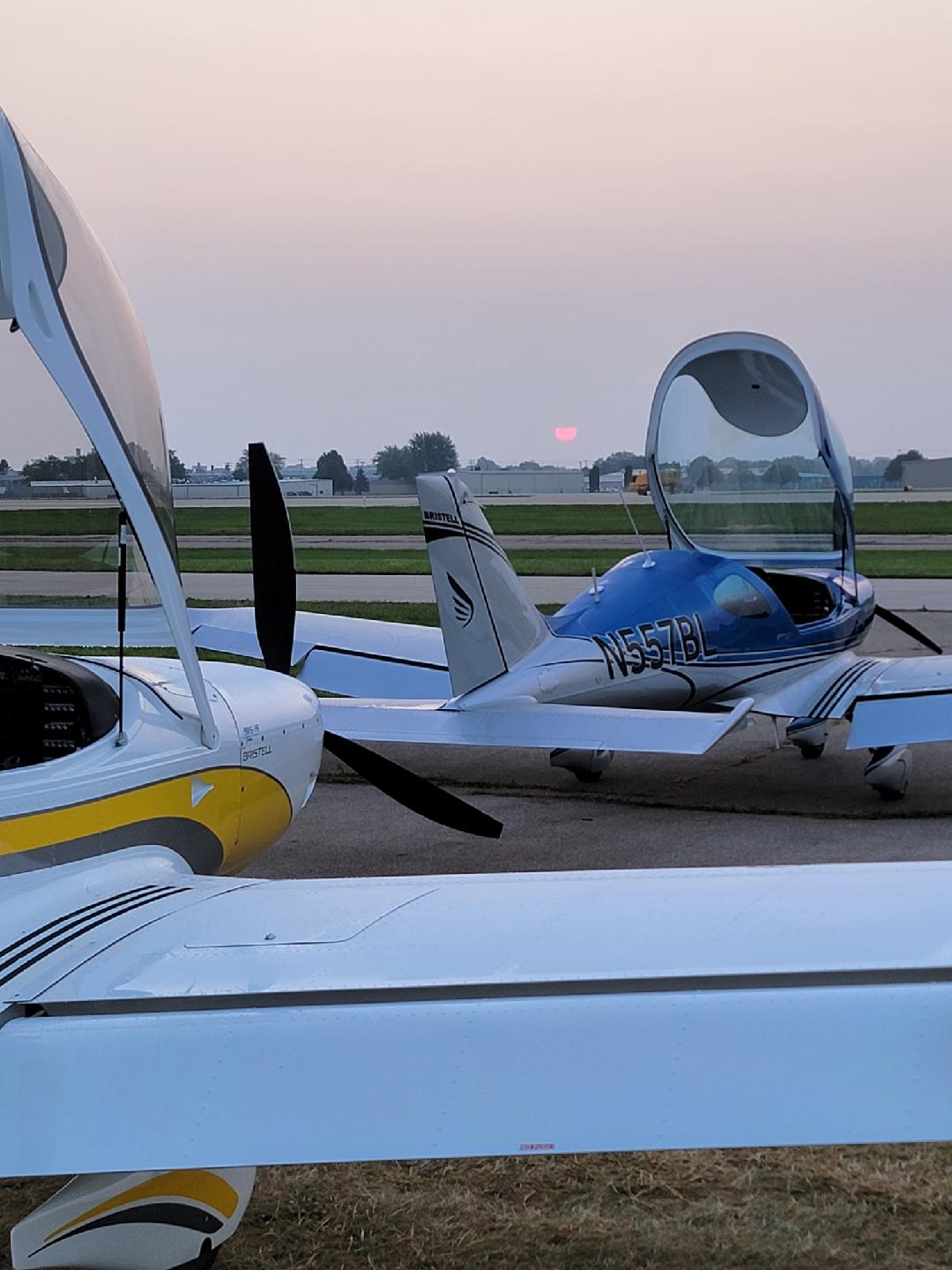
And the cherry on top…I got to go to Airventure the day after my check ride to work at the Bristell booth with my instructor. It was my first time at OSH, and now I certainly know why it is referred to as a airplane lovers’ heaven, because it most certainly is! I really wish I could’ve met more of you FMA guys, but I unfortunately was not able to get there in time for the open mic due to strong headwinds and questionable weather causing us to have to lay over and wait for the afternoon air show to end.

I have also nearly completed my complex-high performance rating in my instructors Navion, which I was able to work on during the trip to OSH. I also got the opportunity to fly a Bristell NG-5 with the Rotax 915is turbocharged engine as PIC with John Rathmell back from OSH…and that thing is an absolute rocket ship. I cruised at around 11,500′ on the way back, and made it back to central PA from OSH in a little less than 4 hours, with our max ground speed during that flight reaching nearly 180kts, or about 210mph (with about a 30 knot quartering tailwind)! And keep in mind, the Bristell is an LSA!

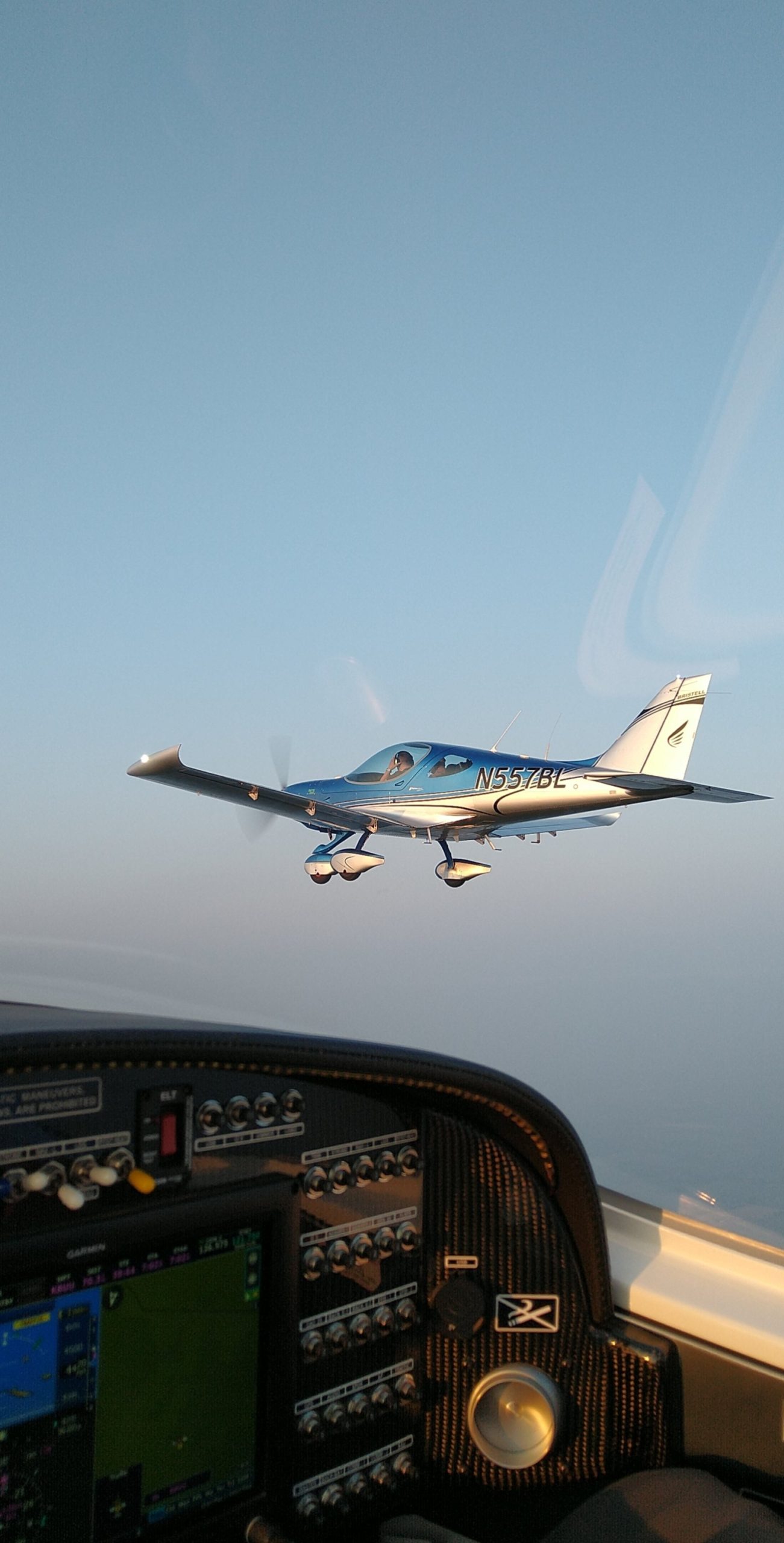
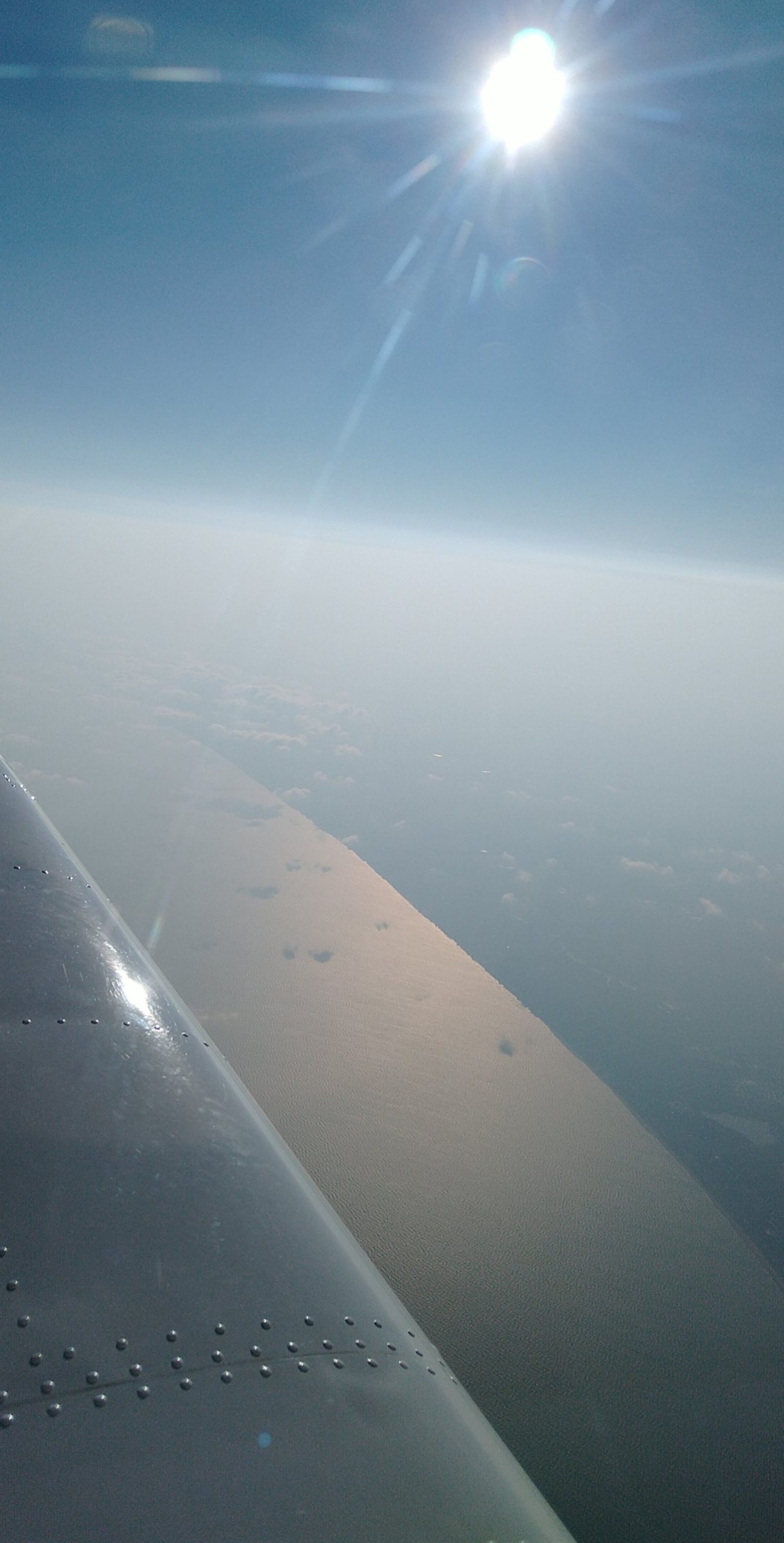
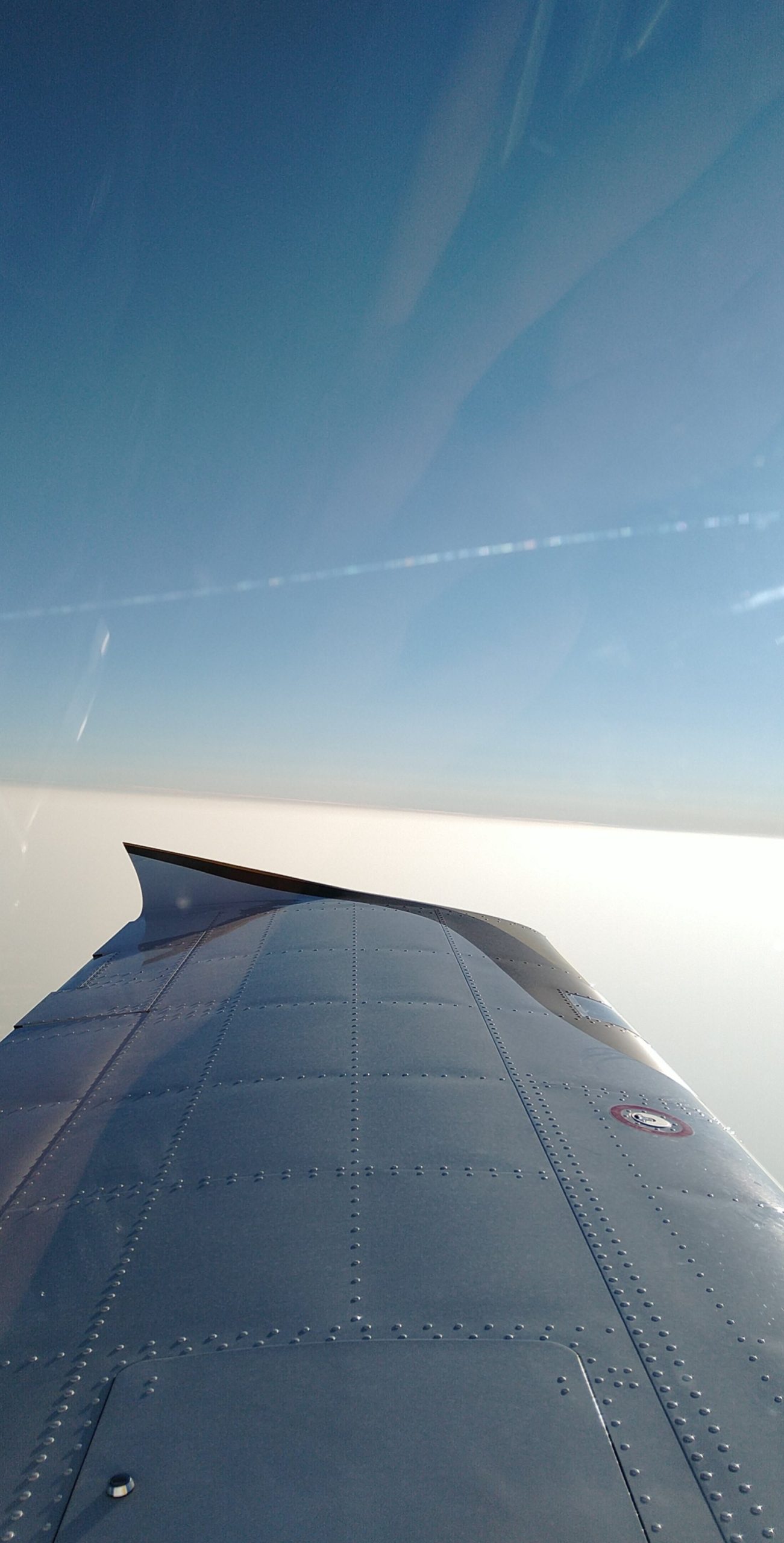
Anyways, here’s some pictures from OSH and my check ride, enjoy!

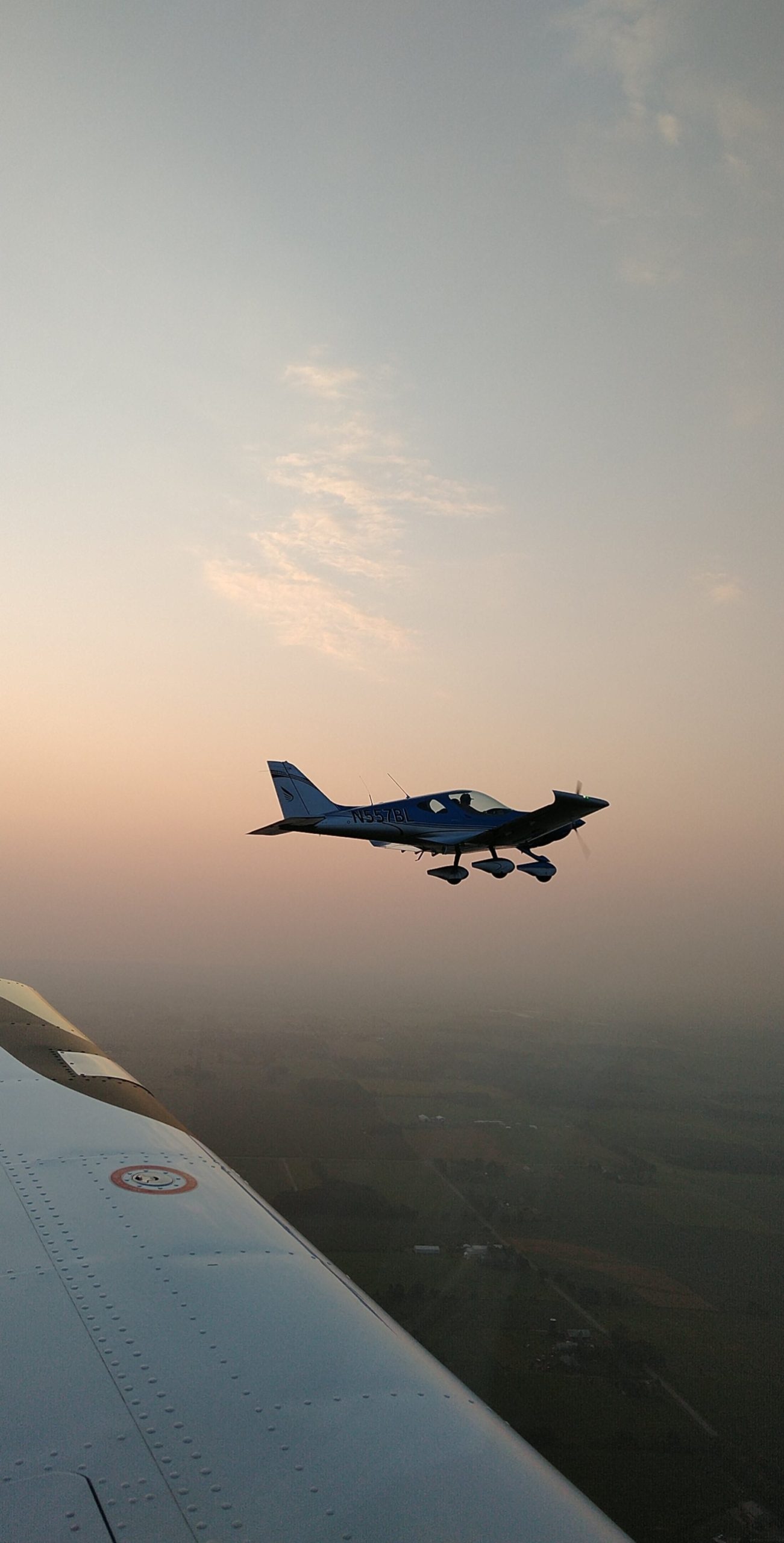
(And no, I was not on the controls during the formation flight of course, that was John Rathmell in the right seat flying, who is the owner of Sport Flying LLC and Bristell aircraft in Lancaster, PA- (717)-735-1600).

Aviation Definitely Teaches Patience

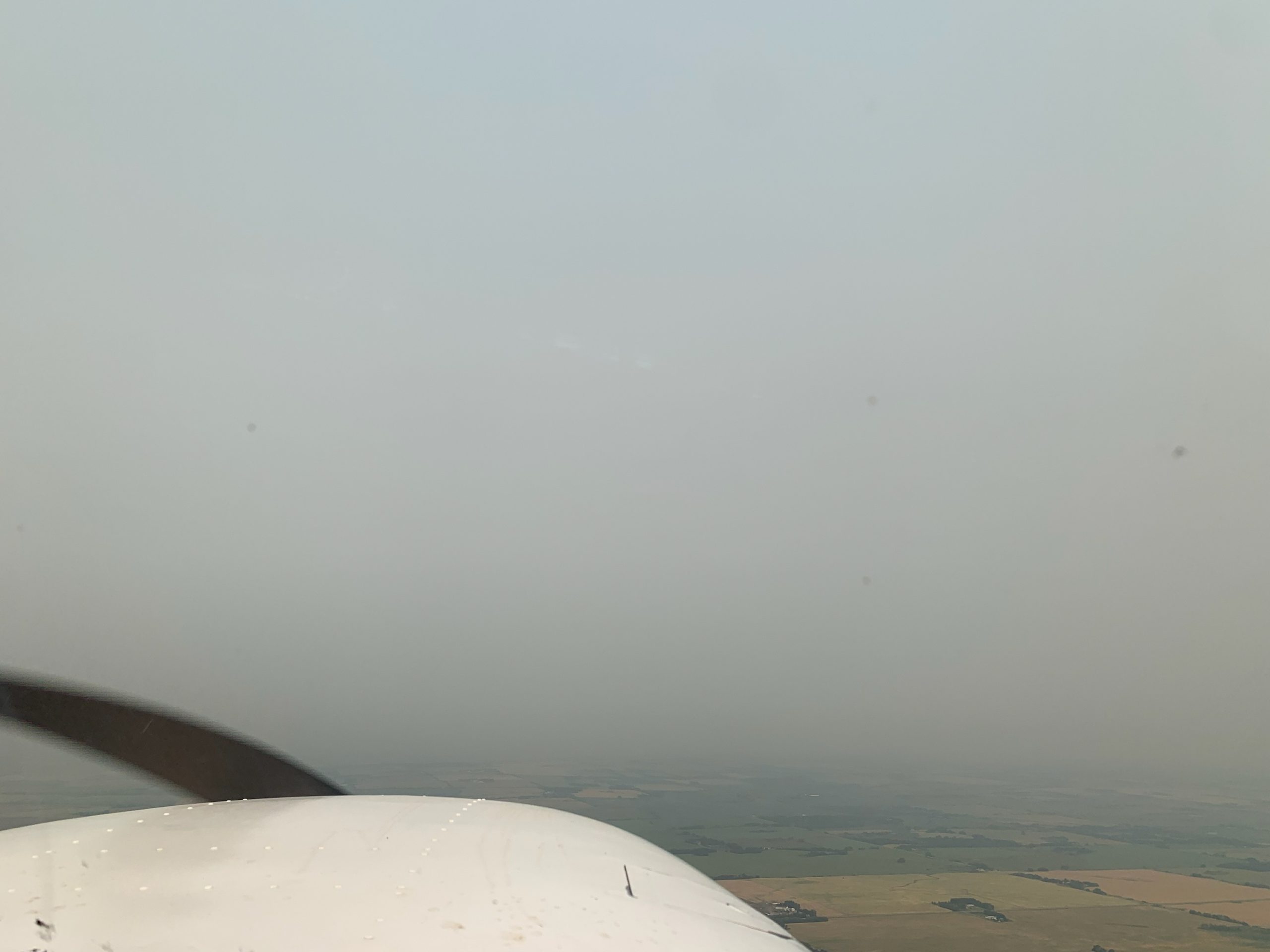
Hi! I know it’s been a while since you last heard from me. Unfortunately I haven’t been flying due to the smoke caused by forest fires. The fires have been raging in my province as well as neighbouring provinces for the last couple weeks which has resulted in a significant loss of visibility, preventing me from safely flying. I wish I could have a more exciting update for all of you, but one thing that I’ve learned from this is that aviation teaches patience.
Attached is a photo of what the air quality looks like from the plane. The safety issue comes from not being able to see the horizon.

First Few Solo Cross Country Flights and Written Test

Hello Everyone!

Since I have began flight training again in June, a lot has happened! I have ‘flown’ through the Private pilot syllabus, and am nearing my check ride. My plan has me taking my check ride right at 40 hours of flight time, and I currently have around 30.

In the meantime, the biggest things that have happened are my first two solo cross country flights. The first one I did about a week and a half ago. I flew from Carlisle to Reading to Lancaster to Carlisle (N94-KRDG-KLNS-N94 117nm). I just finished the second one yesterday, which was my long cross country (160nm). I went from Carlisle to University Park at Penn State to Williamsport to Carlisle (N94-KUNV-KIPT-N94). I also took my written test, which I passed with a 90%, so I’m pretty proud of that. All my cross country flights went really well, although yesterdays was a little stressful, as it was quite turbulent, and KUNV had gusting 20 knot winds with about a 10 knot crosswind component, which is a lot for the airplane I fly, the Bristell NG5, which only weighs about 1100lbs or so with one person and fuel. But I handled it well, and had a safe landing…maybe not a very good one, but a safe one! Next time you hear from me, I should be a brand new Private Pilot!!! I’m excited, and it has been a pleasure to share this journey with you all.

Also, I have been using my Sennheiser headset, and I absolutely love it (https://en-us.sennheiser.com/). The sound cancelling works great, which is awesome because as a musician, I of course don’t want the constant sound of the engine to damage my ears. It is also extremely comfortable, and is great for long flights, much more comfortable than my David Clark headset, especially in the summer, as the gel pads on the David Clark headset tend to get a bit sticky when it is hot. Thanks so much for sending it out for me John! I really love it, and I’ve been using them on every flight since I got them.

Special thanks to our sponsors Gleim (https://www.gleimaviation.com/), My Go Flight (https://mygoflight.com/), Sporty’s Pilot Shop (https://www.sportys.com/), Graphtech/TUSQ (https://graphtech.com/pages/tusq-nuts), Bose Aviation (https://www.bose.com/en_us/products/headphones/aviation_headsets.html), and all our other sponsors and donors for making the FMA Solo Program possible.

Have a wonderful July everyone!

Jake Myers

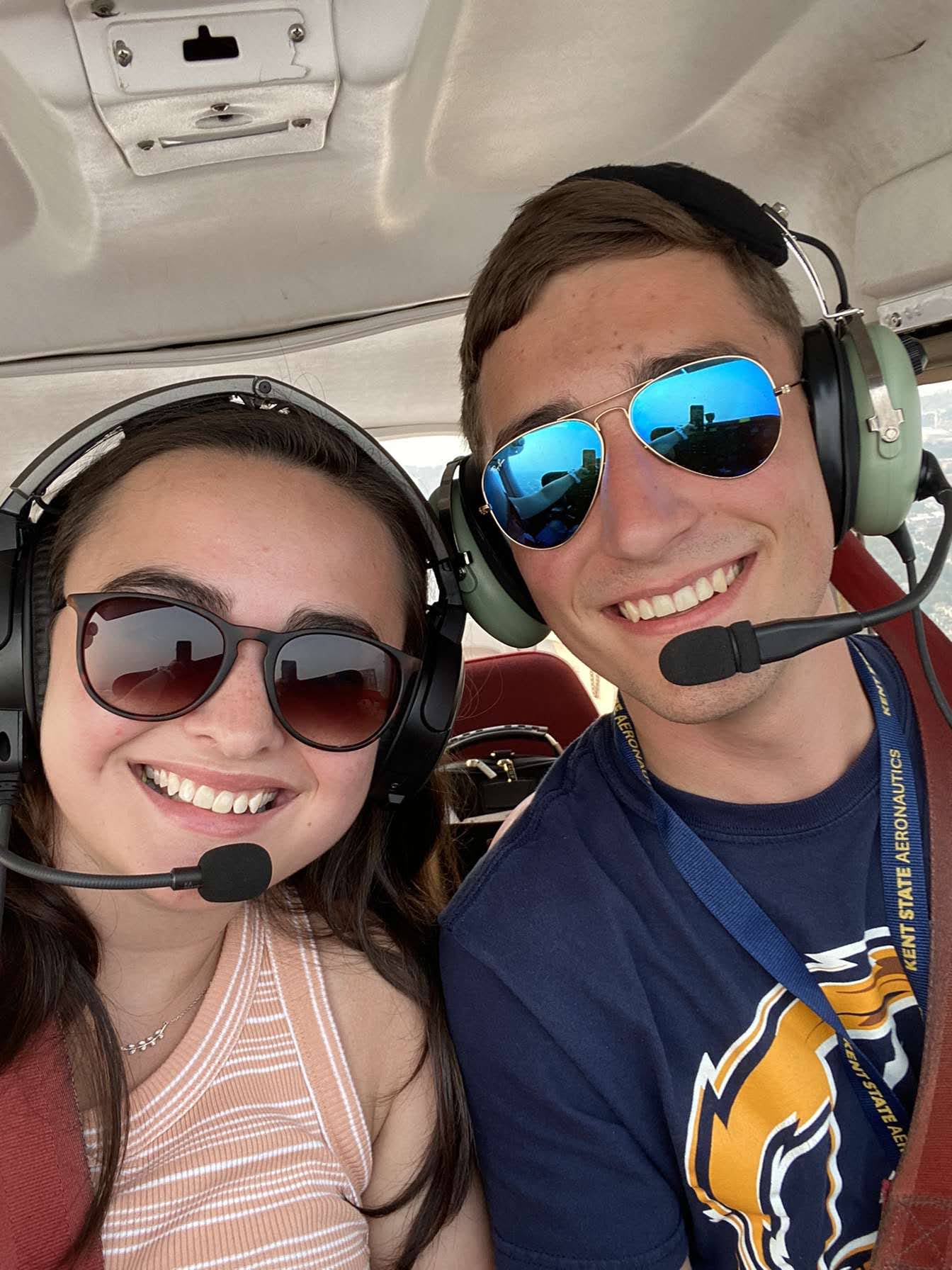
Also, Here’s few pictures from my first solo xc and a maneuver review flight I had with my instructor the other day (I know it looks like I’m flying from the right seat but don’t worry, I’m not, my selfie camera just reverses the picture and I’m not sure how to fix it):


Started Flying!

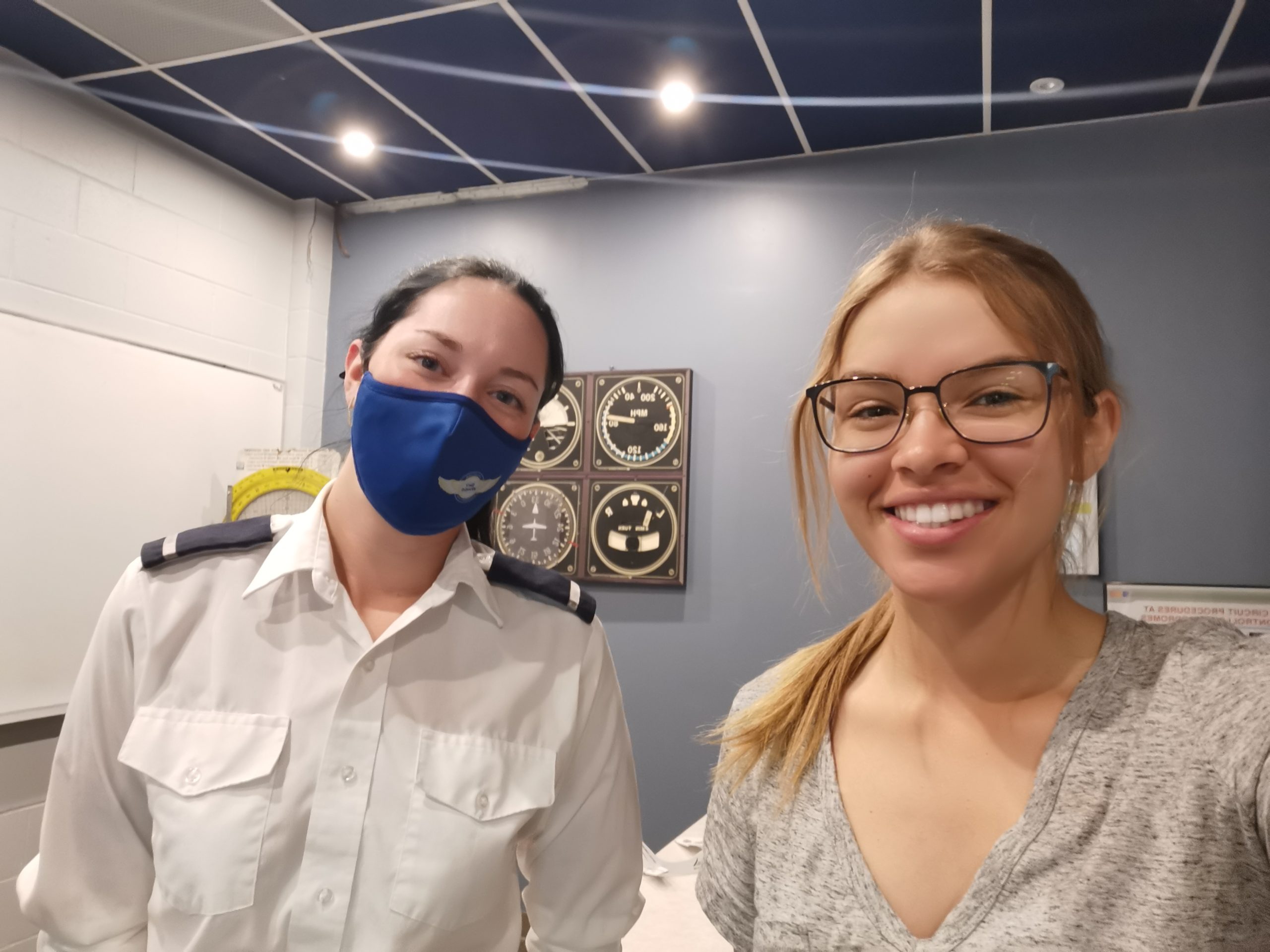
Hello! This past week has been super busy for me. I have officially graduated high school, started my full time summer job and I’ve started flying! I went up last week with my instructor, Savannah, at SkyWings. We practiced climbs, descents and turns and I had control when we took off and landed. I also made some choppy radio calls but that will get better with practice. Alberta is experiencing a heat wave right now of 35℃ (95℉) and it has been this hot all week so we haven’t been able to fly, but I have been spending time in the classroom talking about the theory of maneuvers that we will be practicing, such as slow flight and stalls. I have flights booked for this upcoming week and I hope that the weather will cooperate!

Completed Ground School!

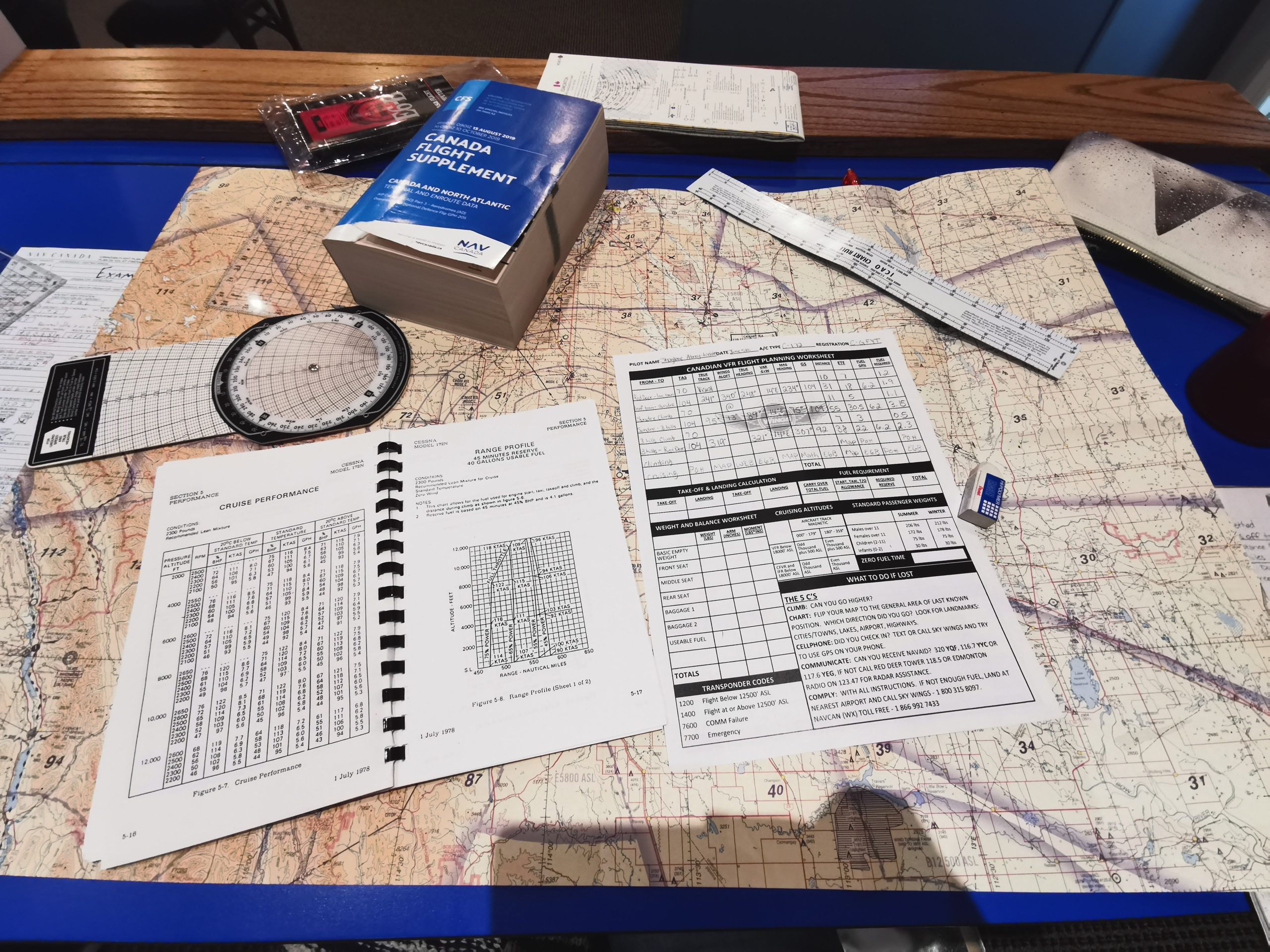
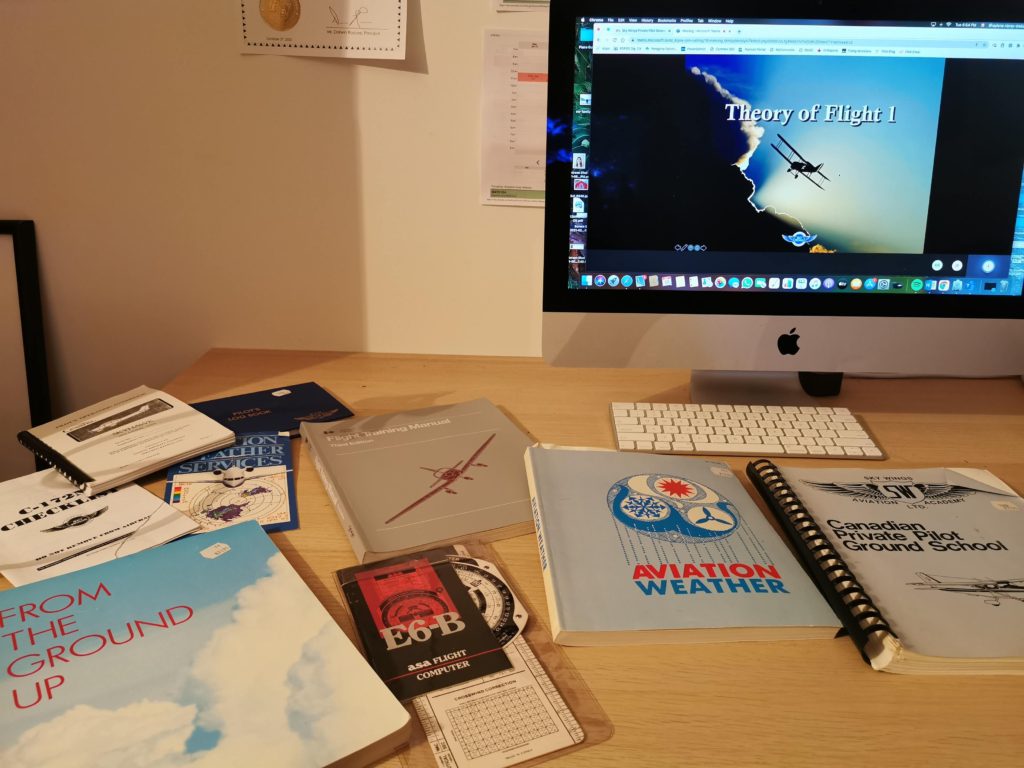
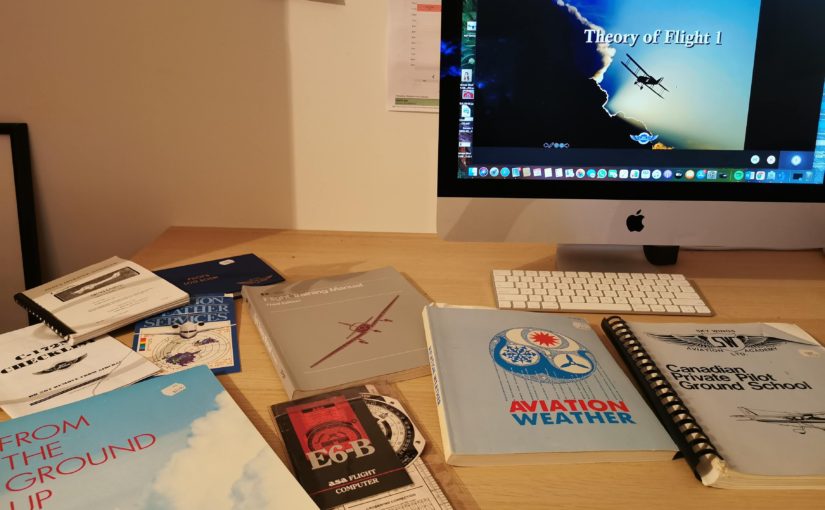
Hi everyone! In the past couple weeks, I have been keeping busy with completing my ground school classes at SkyWings Aviation. We covered approximately 30 hours of ground school in 3 weeks, there is sure a lot of material to cover in that course. We learned everything from radio procedures, the different types of clouds and other meteorology to navigation and filing flight plans. I already wrote and passed my Radio Licence exam and I am preparing to write my PSTAR exam (Pre-Solo Test of Air Regulations), followed by my Transport Canada written exam later on. I was supposed to start flight training this week but it has been raining here for the last couple days so I will be starting it next week. I will keep you all updated on how that goes!

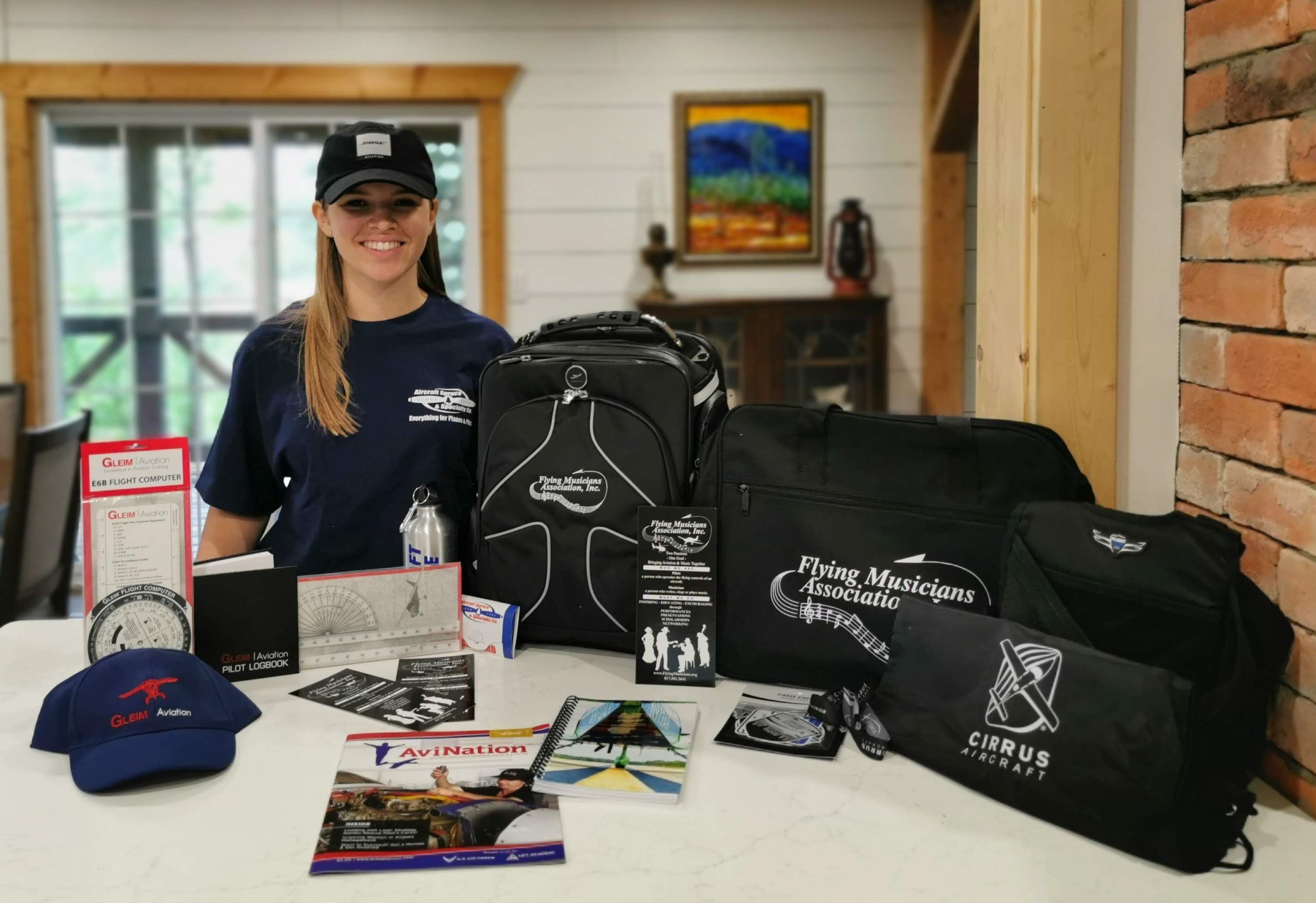
I’d like to say a huge thank you to Gleim Aviation, Aircraft Spruce, Cirrus Aircraft, Sporty’s, Bose Aviation and everyone from FMA for all the gear I received today! I will be putting it all to use as I start flight training!

This image has an empty alt attribute; its file name is 363c4d2f-f2e9-47d2-864b-a77b009a25f3
This image has an empty alt attribute; its file name is IMG_20210518_185442-2-1024x768.jpg